


Wage garnishment can make financial stress worse because it reduces take-home pay before you can budget for rent, groceries, transportation, childcare, and other essentials. Learn why garnishment creates a paycheck squeeze — and how documenting your payments can help you regain control.
The Deduction Is Automatic. The Stress Is Not.
Wage garnishment is often described as an automatic deduction, but anyone living with it knows the experience is anything but simple. The money may be withheld automatically, but the stress that follows is personal, emotional, and often overwhelming.
When wages are garnished, money leaves your paycheck before it ever reaches your bank account. You may still have the same rent, the same car payment, the same grocery bill, the same childcare costs, and the same family responsibilities. But now you have less income available to manage all of it.
That is why wage garnishment can make financial stress worse even when you are paying. In fact, sometimes the most frustrating part is that you are paying. The money is being taken. The obligation is being addressed. The deduction appears on your pay stub. Yet your financial life may still feel harder, not easier.
This article explains why wage garnishment can create such intense financial pressure, how it affects your budget, credit, work life, and family stability, and what you can do to start regaining control. It also explains how SupportPay can help you organize records, document payment history, and explore whether eligible verified payments can support your credit recovery over time.
Why wage garnishment creates instant financial pressure
Most financial problems build slowly. A credit card balance grows month after month. A medical bill sits unpaid. A loan falls behind. A support balance increases. But wage garnishment feels different because the impact can happen immediately.
One paycheck may look normal. The next one may be hundreds of dollars smaller.
That sudden drop in take-home pay can create a cash-flow crisis. Even if the underlying obligation is valid, the timing can be brutal. Your bills do not automatically shrink because your paycheck does. Your landlord does not lower rent. Your grocery store does not discount food. Your utility company does not adjust your bill because payroll withheld money before you were paid.
The result is a paycheck squeeze. You are still responsible for everything you were responsible for before, but you have fewer dollars available to do it.
The paycheck squeeze: what happens after take-home pay drops
Wage garnishment does not only affect the amount deducted. It affects every financial decision that comes after the deduction.
Imagine someone brings home $2,800 per month after taxes. Their regular expenses might look like this:
| Monthly expense | Estimated amount |
|---|---|
| Rent | $1,250 |
| Utilities and phone | $300 |
| Groceries | $500 |
| Car payment and insurance | $475 |
| Gas and transportation | $250 |
| Childcare, school, or family expenses | $300 |
| Minimum debt payments | $200 |
| Total | $3,275 |
Even before garnishment, that budget is already tight. If $400 or $600 is withheld from the person’s paycheck each month, the gap becomes larger. The person may have to choose between paying rent on time, keeping the car insured, buying groceries, avoiding overdraft fees, or covering childcare.
That is why wage garnishment financial stress is so intense. The deduction may be connected to one obligation, but the consequences spread across the entire household.
Why garnishment affects more than one paycheck
It is easy to think of wage garnishment as a single payroll issue: money comes out, money is sent somewhere else, and the process continues. But for the person living with the reduced paycheck, the impact does not stop on payday.
A smaller paycheck can create a chain reaction:
- Rent may be paid late, triggering late fees.
- Utility bills may be delayed, creating shutoff warnings or reconnection fees.
- Credit card balances may increase because everyday expenses move onto credit.
- Bank accounts may overdraft because automatic bills still hit on schedule.
- Car repairs may be postponed, making it harder to get to work.
- Childcare payments may become harder to manage, which can affect work attendance.
- Medical appointments or prescriptions may be delayed.
- Family conflict may increase because money is tighter and emotions are higher.
In other words, wage garnishment can turn one financial obligation into several new problems. The person may be paying what the system requires, but falling behind somewhere else because the household budget no longer works.
Wage garnishment reduces flexibility
One of the most difficult parts of wage garnishment is the loss of flexibility.
When money is not garnished, a person can make decisions based on what is happening that month. If the car breaks down, they may temporarily pay less toward a credit card. If a child needs school supplies, they may delay a discretionary purchase. If rent is due, they may prioritize housing first.
Wage garnishment removes some of that flexibility because the payment is taken before the person can decide how to use the money. That may be legally required, but it can still create hardship.
This is especially difficult for people who are already living paycheck to paycheck. A person with savings may be able to absorb the deduction for a while. A person without savings may immediately face impossible choices.
The loss of flexibility is not just a budgeting issue. It can feel like a loss of control. When money is withheld before it reaches you, it can feel like your paycheck is no longer fully yours — even though you earned it.
The emotional weight of garnished wages
Financial stress is not only about numbers. It is also about what those numbers do to your mind, your relationships, your workday, and your sense of stability.
People dealing with garnished wages may feel embarrassment, anger, shame, fear, confusion, or exhaustion. They may worry that their employer knows too much about their personal life. They may avoid opening mail because they are afraid of more notices. They may feel judged by payroll, a court, an agency, a creditor, a co-parent, or family members.
That emotional weight can be heavy. It can make it harder to focus at work, sleep well, communicate calmly, or plan ahead. Even if the garnishment is being handled correctly, the person may still feel like they are constantly behind.
The credit paradox: paying does not always mean progressing
One of the most frustrating parts of wage garnishment is what we call the credit paradox.
On one hand, wage garnishment may show that money is being paid consistently. The deduction happens on a regular schedule. The amount may be significant. The payments may continue for months or years. From a common-sense perspective, that looks like payment history.
On the other hand, those payments may not automatically appear as positive payment history on a credit report.
That is the paradox: the system may recognize the negative event that led to garnishment, but not the ongoing payments that show responsibility afterward.
For example, a person may have a child support obligation paid through wage withholding. Hundreds of dollars may be deducted every month. But those on-time payments may not automatically help build positive credit history the way a credit card, auto loan, student loan, or mortgage payment might.
Why credit recognition matters during financial recovery
Credit matters because it can affect the cost of everyday life. A stronger credit profile may help someone qualify for better interest rates, lower deposits, better loan terms, apartment approvals, utility accounts, cell phone plans, insurance pricing where allowed, and more affordable emergency options.
That means credit is not just about borrowing money. It is about financial mobility.
When wage garnishment reduces take-home pay, a person may need affordable financial options more than ever. But if the underlying debt or delinquency has hurt their credit, and the ongoing payments are not helping rebuild it, they may be trapped paying higher costs at the exact moment they can least afford them.
That is why eligible positive payment reporting can matter. If someone is already making verified payments, those payments may have value as part of a broader financial recovery record. Results vary, and no specific score increase is guaranteed, but making consistent responsibility visible can be an important step.
How wage garnishment can create more debt
Wage garnishment is often intended to collect a debt or satisfy an obligation. But when the deduction leaves someone short on basic expenses, it can lead to more debt.
Common examples include:
- Using credit cards for groceries, gas, or utilities because cash is short.
- Paying only minimum balances and watching interest grow.
- Overdrafting a bank account when automatic bills hit before payday.
- Taking payday loans or high-cost installment loans to bridge the gap.
- Borrowing from friends or family, which can strain relationships.
- Missing other bills, creating late fees, penalties, or collections.
This is how wage garnishment can become part of a larger financial spiral. The garnished payment may be made, but other obligations may fall behind. A person can feel like they are working hard and still moving backward.
Why financial stress affects work
Wage garnishment also affects the workplace, even when employers treat it only as a payroll compliance issue.
An employee dealing with garnishment may be distracted by money worries, agency calls, court notices, co-parent conflict, or fears about losing housing or transportation. They may need time during work hours to call a court, payroll department, child support agency, creditor, or attorney. They may miss work because they cannot afford childcare, gas, car repairs, or emergency expenses.
For employers, wage garnishment can create administrative work and signal deeper financial stress in the workforce. Payroll must process orders, calculate deductions, remit payments, answer employee questions, and maintain compliance. HR may become involved when the employee is overwhelmed or when financial stress affects attendance or performance.
This does not mean employees should be judged for having garnishments. It means employers should understand that garnishment is not only a payroll transaction. It is often a sign that an employee may need better tools, clearer records, and a path toward financial recovery.
Common mistakes people make when wages are garnished
When people are overwhelmed, they often avoid the problem. That is understandable, but it can make things worse. If your wages are being garnished, watch out for these common mistakes.
Mistake 1: Ignoring the notice
Garnishment notices can be scary, confusing, or embarrassing. But ignoring them can make it harder to understand your rights, deadlines, balances, and options. Read every notice carefully and save a copy.
Mistake 2: Assuming the amount is correct
Payroll departments, agencies, creditors, and courts can make mistakes. The deduction may be calculated incorrectly, applied to the wrong case, or continued after it should have changed. Always compare the deduction to the order and your records.
Mistake 3: Not saving pay stubs
Your pay stub is one of the clearest records that money was withheld from your paycheck. Save every pay stub that shows the garnishment deduction, including year-to-date totals when available.
Mistake 4: Not checking whether payments are credited
Withholding and crediting are not always the same thing. Your employer may withhold money on payday, but the agency or creditor record may update later. Check whether payments are actually being applied to the correct account or case.
Mistake 5: Relying only on verbal conversations
Phone calls can be useful, but written records are easier to reference later. When possible, follow up with an email or save notes that include the date, time, person you spoke with, and what they said.
Mistake 6: Waiting until there is a problem to organize records
The best time to build your record is now. If a dispute happens later, you do not want to search through months of payroll portals, emails, letters, and agency websites under pressure.
How to regain control when wages are garnished
You may not be able to control every part of wage garnishment, but you can control how organized you are. Organization is not a magic fix, but it gives you leverage. It helps you understand what is happening, spot errors, ask better questions, and prove what has been paid.
Start with these steps:
- Find the original order. Identify who issued the garnishment, what obligation it relates to, the case number, and who receives the money.
- Review your pay stub. Look for the garnishment line item, deduction amount, and year-to-date total.
- Save every pay stub. Download digital copies or scan paper copies so you have your own record.
- Compare payroll records to agency or creditor records. Make sure the amounts withheld are being credited correctly.
- Track dates and amounts. Create a simple record of each payday, amount withheld, recipient, and proof saved.
- Keep written notes. Document calls, emails, letters, and any instructions you receive.
- Ask what process is required for review or release. If you believe the balance is wrong or the garnishment should end, ask the court, agency, creditor, or issuing authority what documentation they need.
- Explore whether eligible payments can support your credit recovery. If you are already making verified payments, those records may be useful beyond compliance.
A simple garnishment stress-reduction checklist
When financial stress is high, even small steps can help you feel more in control. Use this checklist as a starting point.
Download your most recent pay stub
Find the garnishment deduction line
Save the original garnishment or income withholding order
Write down the case number or account number
Save the agency, court, creditor, or recipient contact information
Compare the amount withheld to the amount credited
Create a folder for pay stubs, notices, and payment histories
Upload proof into SupportPay if you want a more organized record
Review whether eligible payments may qualify for Credit Boost
How SupportPay helps reduce the stress of garnishment
SupportPay does not replace a court, agency, employer, creditor, payroll department, or attorney. It does not remove legal obligations or guarantee that a garnishment will stop. But it can help with one of the biggest sources of stress: the lack of organized proof.
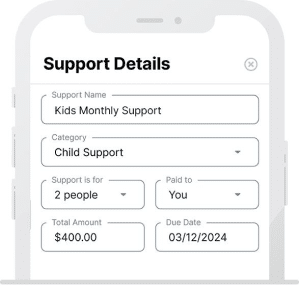
SupportPay helps people manage and document family-related financial responsibilities in one place. For someone dealing with wage garnishment, that can include uploading pay stubs, saving orders, tracking payment activity, documenting obligation start dates, and keeping a clearer history of what has been paid.
That matters because wage garnishment can feel like money is disappearing into a system you cannot see. SupportPay helps create a record you can actually reference.
For eligible users who opt in, SupportPay Credit Boost can also help report qualifying positive payment activity. This can help make verified payments more visible as part of a credit-building record. SupportPay does not guarantee a specific score increase or financial savings amount, and results vary based on the user’s credit profile and other factors. But the idea is powerful: if you are already making responsible payments, they should not stay invisible.
SupportPay is not another debt product
It is important to be clear about what SupportPay is not. SupportPay is not a payday loan, credit card, earned wage access product, or debt relief company. It does not encourage people to borrow more money or take on new credit.
Instead, SupportPay focuses on payments people are already making. Child support. Shared expenses. Family reimbursements. Caregiving costs. Support obligations. Wage garnishment records. These are real financial responsibilities that often happen outside traditional credit systems.
That is what makes SupportPay different. It helps organize and document real payment behavior so responsible financial activity may be easier to prove and, when eligible, easier to recognize.
Why this matters for families
Wage garnishment rarely affects only one person. It can affect children, co-parents, spouses, partners, caregivers, roommates, and extended family members. When take-home pay drops, the whole household may feel it.
Parents may have harder conversations about school expenses, medical costs, extracurricular activities, groceries, and transportation. Co-parents may argue over whether payments were made or credited. Caregivers may struggle to contribute to an aging parent’s needs. Family members may step in to help, but without clear records, even help can create conflict.
Clear documentation reduces confusion. It gives everyone a better understanding of what was paid, when it was paid, and what proof exists. In emotionally charged financial situations, clarity can reduce stress.
Why this matters for employers
Employers often see wage garnishment as a payroll compliance task, but the employee experiences it as a financial wellness crisis. The order arrives in payroll, but the consequences show up in real life: stress, distraction, absenteeism, turnover risk, and more questions for HR or payroll teams.
Financial wellness benefits often focus on education, budgeting, or emergency cash access. Those tools can help, but they may not address the credit gap created when employees are already making significant payments that are not recognized positively.
SupportPay can serve as a recovery layer. It helps employees document payments, organize proof, and potentially turn eligible verified payment activity into a positive credit signal. For employers, that means the same garnishment that once looked only like a compliance burden may become an opportunity to support financial recovery.
What to do if garnishment is making your financial stress worse
If wage garnishment is making it harder to cover your bills, start by separating the situation into three parts: what is legally required, what is being withheld, and what you can document.
First, identify the legal or administrative source of the order. Is it child support, a tax levy, a student loan, a court judgment, or another obligation? Second, confirm what payroll is withholding and how often. Third, build your own record so you can verify whether the payments are being applied correctly.
If you believe the garnishment amount is wrong, the balance is incorrect, or the deduction should have stopped, contact the court, agency, creditor, or issuing authority listed on the order. For legal advice, speak with a qualified attorney. For payroll questions, contact your employer’s payroll department. For documentation and record organization, use a system like SupportPay so your proof is easier to find when you need it.
You Are Not Failing. You Are Under Pressure.
When wages are garnished, it can be easy to feel like you are failing financially. But a garnished paycheck does not tell the whole story.
It does not show how hard you are working. It does not show the bills you are still trying to pay. It does not show the children, parents, or family members depending on you. It does not show the stress of trying to make one smaller paycheck cover a full-size life.
Wage garnishment can create pressure, but pressure is not the same as failure. The next step is to get organized, protect your records, and make sure the payments already leaving your paycheck are not forgotten.
You may not be able to change the garnishment overnight. But you can start building a clearer record today. You can save the proof. You can track the payments. You can compare what was withheld to what was credited. And, if your payments are eligible, you can explore whether SupportPay Credit Boost can help make those verified payments more visible as positive payment activity.
The deduction may be automatic. Your recovery does not have to be.
Start Now
If wage garnishment is already part of your paycheck, do not let the payment history disappear. SupportPay helps you organize garnishment records, upload proof, track payment activity, document obligation start dates, and explore whether eligible verified payments can support your credit recovery. Start with your next pay stub. Save it. Upload it. Track it. Make the money already leaving your paycheck easier to prove and harder to overlook.
FAQ: Wage Garnishment and Financial Stress
Why does wage garnishment feel so stressful?
Wage garnishment reduces take-home pay before you can budget for essentials like rent, groceries, transportation, childcare, utilities, and medical needs. Even if the payment is required, the reduced paycheck can create immediate financial pressure.
Can wage garnishment cause financial hardship?
Yes. Wage garnishment can contribute to hardship when the deduction leaves someone unable to cover basic living expenses or other bills. If you are experiencing hardship, contact the court, agency, creditor, payroll department, or a qualified attorney to understand your options.
Can wage garnishment lead to more debt?
It can. When take-home pay drops, some people rely more on credit cards, overdrafts, payday loans, or delayed payments to cover everyday expenses. That can create additional debt, fees, and stress.
Does wage garnishment help my credit if I am paying?
Not automatically. Wage garnishment may show that payments are being made, but those payments may not appear as positive credit history unless they are eligible, verified, and reported through a system designed to report positive payment activity.
What records should I keep if my wages are garnished?
Save the garnishment order, pay stubs, agency or creditor payment histories, balance statements, case numbers, emails, letters, and any release or modification notices. These records can help you verify what was withheld and whether payments were credited correctly.
Can my employer stop wage garnishment if I am under financial stress?
Usually no. Employers generally must follow the garnishment order until they receive official instructions to modify or stop it. If you believe the order is wrong or should change, contact the court, agency, creditor, or issuing authority listed on the notice.
How can SupportPay help with wage garnishment stress?
SupportPay helps users organize records, upload proof, track payment activity, preserve payment history, and explore whether eligible verified payments can support positive credit reporting through Credit Boost. SupportPay does not provide legal advice or guarantee a specific credit outcome.
Is SupportPay a loan or debt relief product?
No. SupportPay is not a loan, credit card, payday loan, earned wage access product, or debt relief company. It helps organize and document payments people are already making.