


Wage garnishment and credit scores are connected in a frustrating way: the debt behind a garnishment may hurt credit, while the ongoing payments may not automatically help. Learn why bad credit costs more, how payment history matters, and how eligible verified payments may support recovery.
The Credit Problem Behind Wage Garnishment
Wage garnishment and credit scores are often connected, but not always in the way people expect. A garnishment can be the result of a debt, missed payment, judgment, support obligation, tax issue, or other financial problem. That underlying issue may already have affected credit. But once money starts coming out of the paycheck, the ongoing payments may not automatically help rebuild credit.
That can feel unfair. You may be paying every pay period. The deduction may be consistent. The amount may be significant. Your pay stub may clearly show that money is being withheld and sent where it is supposed to go. But unless the payment activity is eligible, verified, and reported in a way credit systems recognize, those payments may not appear as positive payment history.
This creates a difficult gap. The financial mistake, delinquency, or obligation may be visible. The recovery effort may be invisible.
This article explains how wage garnishment can relate to credit scores, why bad credit costs more, how credit score factors work, why payment history matters, and how SupportPay can help users organize records and explore whether eligible verified payments can support positive credit reporting.
Does wage garnishment affect your credit score?
Wage garnishment itself may not always appear on a credit report in the same way for every situation. The bigger credit issue is often the event that led to the garnishment. Depending on the type of obligation, a credit report may already reflect missed payments, collections, charge-offs, judgments, tax liens in limited contexts, or other negative history.
For example, if a credit card account goes unpaid and eventually leads to a judgment and garnishment, the missed payments and collection activity may have damaged credit before the garnishment began. If unpaid support or another obligation triggered enforcement, the negative consequences may also appear in different ways depending on the rules and reporting practices involved.
The confusing part is that the payments made through garnishment may not automatically repair the damage. A person can be paying consistently through payroll withholding and still not receive positive credit recognition for those payments.
The credit paradox: the negative may show, but the payment may not
The wage garnishment credit score problem is really a credit paradox.
Credit systems are designed to evaluate financial behavior, especially whether people pay obligations on time. Wage garnishment may create a clear record of recurring payments. But those payments may stay inside payroll records, agency systems, court files, child support portals, or creditor statements instead of appearing as positive payment activity.
That means someone may experience the downside of credit reporting without receiving recognition for the recovery activity.
This is especially frustrating for people paying child support, family support, or other recurring obligations through wage withholding. The payments may be automatic and consistent, but they may not build credit the way an auto loan, mortgage, student loan, or credit card payment might.
How credit scores affect the cost of life
Credit scores matter because they can affect real costs. A credit score is not just a number on a screen. It may influence whether someone qualifies for financial products, how much interest they pay, how large a deposit is required, and what options are available during an emergency.
Depending on the situation, credit may affect:
- Auto loan approvals and interest rates
- Credit card interest rates and credit limits
- Mortgage qualification and pricing
- Apartment applications and rental screening
- Utility, phone, or service deposits
- Insurance pricing where credit-based pricing is allowed
- Emergency borrowing options
That is why credit recovery matters during and after wage garnishment. If a person is already dealing with reduced take-home pay, higher credit costs can make recovery even harder.
The five major credit score factors
Credit scoring models can vary, but many consider several broad categories. Understanding these factors helps explain why payment reporting may matter.
| Credit factor | Why it matters | How wage garnishment records may relate |
|---|---|---|
| Payment history | Often the most important factor | Eligible verified payments may show consistency when reported properly |
| Amounts owed or utilization | High balances can pressure scores | Reduced take-home pay may lead to higher credit card use |
| Length of credit history | Longer histories can be helpful | An accurate obligation start date may reflect a longer payment timeline |
| Credit mix | Different account types can contribute to a fuller profile | Eligible support or garnishment-related activity may add a different payment record |
| New credit and inquiries | Too many new applications can create temporary pressure | SupportPay Credit Boost does not require a hard inquiry or new credit card |
No single factor determines every credit outcome. Results vary based on the full credit file, scoring model, bureau data, payment history, balances, age of accounts, and other activity.
Why payment history matters most
Payment history is commonly one of the most important credit score factors because it helps lenders understand whether someone pays obligations consistently. If someone has a strong record of on-time payments, that can signal reliability. If someone has missed payments, collections, or defaults, that can create risk signals.
This is why wage garnishment payments can feel so important. They may be consistent, recurring, and documented. The person is paying. But unless those payments are reported as eligible positive payment activity, the credit system may not see them.
That is the gap SupportPay is designed to help address. If eligible verified payments can be organized and reported, they may become part of a broader positive payment record.
How bad credit costs money
Bad credit can make life more expensive. It can increase borrowing costs, limit choices, require larger deposits, and make financial emergencies harder to handle. For someone already dealing with wage garnishment, those added costs can compound the stress.
The cost of bad credit may show up in several ways:
- Higher interest rates on auto loans
- Higher credit card APRs
- Higher required deposits for utilities or phones
- Fewer rental options or additional rental requirements
- More expensive emergency borrowing
- Less flexibility when unexpected expenses happen
These costs are not guaranteed in every situation, and credit is not the only factor lenders, landlords, or service providers consider. Income, debt, employment, location, collateral, market conditions, and application details also matter. But credit can play a meaningful role.
Auto loan example: why credit tiers matter
Transportation is one of the clearest examples of how credit can affect everyday life. Many people need a reliable vehicle to get to work, take children to school, attend medical appointments, and manage family responsibilities.
SupportPay materials use an example of a $25,000 used car loan over 60 months. A borrower in a near-prime credit tier with an example APR around 13.74% may have a payment of about $578 per month. A borrower in a prime credit tier with an example APR around 9.06% may have a payment of about $520 per month.
| Example credit tier | Example APR | Estimated monthly payment | Estimated difference |
|---|---|---|---|
| Near-prime | 13.74% | $578 | — |
| Prime | 9.06% | $520 | About $59/month less |
That difference is roughly $704 per year and more than $3,500 over the loan term. This is only an example, not a guarantee. Actual rates, approvals, and savings depend on the lender, credit profile, income, vehicle, loan terms, market conditions, and other factors.
Still, the example shows why credit recovery can matter. A better credit profile may help reduce the cost of necessary transportation.
Credit card example: APR differences add up
Credit card APRs can also create hidden costs. When wage garnishment reduces take-home pay, some people rely more on credit cards for groceries, gas, utilities, or emergencies. If the balance grows and the APR is high, interest can make recovery harder.
A simple way to estimate potential annual interest difference is:
Annual savings = balance × APR reduction
For example, if someone carries a $5,000 balance and qualifies for an APR that is 5 percentage points lower, the potential annual interest difference could be about $250, depending on repayment behavior.
This is not a guarantee. Credit card interest depends on daily balances, payment timing, fees, promotional rates, and account terms. But it shows how credit improvement may reduce real costs over time.
Mortgage and housing example
Credit can also affect housing. For mortgages, credit may influence approval, pricing, interest rate, loan program eligibility, and monthly payment. Mortgage savings can be significant, but they depend heavily on loan size, rates, down payment, debt-to-income ratio, market conditions, and the full borrower profile.
For renters, credit may affect application screening, deposits, guarantor requirements, or approval conditions. Not every landlord uses credit the same way, and local rules may apply, but credit can still influence access to stable housing.
For someone whose wages are garnished, housing stress can be especially serious. Reduced take-home pay plus limited credit options can make moving, deposits, or approvals harder.
Why wage garnishment can make credit recovery harder
Wage garnishment can make credit recovery harder because it reduces the cash available to manage other bills. A person may be paying the garnished obligation but falling behind elsewhere.
For example:
- A reduced paycheck may cause late rent or utility payments.
- Credit card balances may increase because cash is short.
- Overdraft fees may build up when automatic payments hit.
- Car repairs may be delayed, affecting work attendance.
- Emergency savings may be depleted.
This can create a cycle where wage garnishment addresses one obligation while making other financial obligations harder to manage. If the garnishment payments do not count positively, the person may feel stuck.
How SupportPay helps close the credit gap
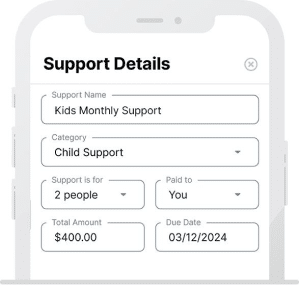
SupportPay helps users organize family-related financial responsibilities, upload proof, track payment history, document obligation start dates, and preserve records. For eligible users who opt in, SupportPay Credit Boost can help report qualifying positive payment activity.
The goal is to make responsible payments easier to prove and harder to overlook. If someone is already paying through wage garnishment or support-related withholding, those payments may represent real financial consistency. SupportPay helps organize the documentation that may support eligible positive reporting.
SupportPay does not provide legal advice, stop garnishments, change court orders, guarantee credit score increases, or promise savings. Results vary. But it can help users turn scattered records into a clearer payment history.
What documents should you keep?
If your wages are being garnished and you want to protect your records, documentation matters. Save:
- The original garnishment or income withholding order
- Child support, support, court, agency, tax, or creditor notices
- Every pay stub showing the deduction
- Year-to-date payroll totals
- Agency, creditor, or child support payment histories
- Balance or arrears statements
- Proof of the original obligation start date
- Modification, release, satisfaction, or termination notices
- Emails, letters, and written notes from calls
These records may help with balance disputes, agency questions, release requests, court communications, and eligible positive payment reporting.
Credit recovery checklist
Save your garnishment or income withholding order
Download every pay stub showing the deduction
Track the pay date, amount withheld, and recipient
Compare payroll deductions to agency or creditor records
Save proof of the original obligation start date
Upload records into SupportPay
Review whether eligible payments may qualify for Credit Boost
Keep expectations realistic: results vary and are not guaranteed
Make your payment history visible
If wage garnishment payments are already leaving your paycheck, do not let the record disappear. Those payments may represent consistency, responsibility, and real financial effort. But if they stay hidden in payroll systems or agency records, they may not help your credit profile.
Getting organized is the first step. Save proof. Track each payment. Compare records. Document the obligation start date. Then explore whether eligible verified payments can support positive reporting through SupportPay Credit Boost.
You may not be able to control every part of wage garnishment, but you can control how well you document the payments already being made.
Start Now
If you are paying through wage garnishment, do not let that payment history go unused. SupportPay helps you organize garnishment records, upload proof, track payment history, document obligation start dates, and explore whether eligible verified payments can support your credit recovery. The payments are already happening. Make the record count.
FAQ: Wage Garnishment and Credit Scores
Does wage garnishment automatically lower my credit score?
The garnishment itself may not always be reported the same way, but the underlying debt, missed payments, judgment, collection, tax issue, or support enforcement matter may affect credit depending on the situation.
Can wage garnishment payments improve my credit score?
They may help if they are eligible, verified, properly documented, and reported as positive payment activity. Wage garnishment alone does not guarantee a credit score increase.
Why do garnishment payments not automatically help credit?
Many garnishment payments remain in payroll, agency, court, creditor, or child support systems and are not automatically reported as positive payment history to credit bureaus.
How much can my credit score improve?
Results vary. Credit outcomes depend on the full credit profile, scoring model, bureau processing, payment history, balances, account age, and other factors. SupportPay does not guarantee a specific score increase.
Can bad credit make life more expensive?
Yes, depending on the situation. Bad credit may affect interest rates, deposits, approvals, loan terms, rental screening, and some insurance pricing where allowed.
Does SupportPay require a hard inquiry?
No. SupportPay Credit Boost does not require a hard inquiry because it is not an application for a new loan or credit card.
Is SupportPay a loan or credit card?
No. SupportPay is not a loan, credit card, payday product, or earned wage access product. It helps users organize records and explore eligible positive payment reporting for payments they are already making.
What documents should I upload for wage garnishment credit reporting?
Helpful documents may include garnishment orders, pay stubs, agency payment histories, balance statements, proof of obligation start date, modification notices, and release notices.