


Wage garnishment can be one of the most stressful things to see on a paycheck. Money is removed before it ever reaches your bank account, and you may be left trying to cover rent, groceries, transportation, childcare, and other bills with less take-home pay than expected. But wage garnishment is more than a payroll deduction. It is a legal or administrative process that can affect your cash flow, your financial stability, your credit options, and your ability to recover financially. The more you understand how wage garnishment works, the better prepared you are to track payments, identify mistakes, protect your records, and make sure the money being withheld does not disappear without helping your financial future.
The Money Leaves Your Paycheck — But Where Does It Go?
Wage garnishment has a way of making people feel powerless. One day your paycheck looks normal. Then, suddenly, a portion of your earnings is gone before the money ever reaches your bank account. You may still be working the same hours, doing the same job, and carrying the same responsibilities — but your take-home pay is smaller.
For many people, the most frustrating part is not only that money is being taken. It is that the money can feel like it disappears into a system they cannot see. Payroll withholds it. A court, agency, creditor, or child support office receives it. A balance may or may not update right away. A payment history may or may not be easy to access. And even when payments are made consistently, those payments may not automatically help build positive credit history.
That is the paycheck trap.
Wage garnishment can prove that you are making payments. It can show that money is being withheld on a regular schedule. It can represent hundreds or even thousands of dollars each month. But unless those payments are clearly documented, properly credited, and, when eligible, reported as positive payment activity, they may not do much to help you move forward financially.
This article explains how wage garnishment payments work, why they can get lost or overlooked, what records you should keep, how to spot potential errors, and how SupportPay can help make eligible payments more organized, visible, and potentially credit-building.
What is wage garnishment?
Wage garnishment is a legal or administrative process that requires an employer to withhold part of an employee’s paycheck and send that money to another party. That party may be a court, government agency, creditor, child support agency, tax authority, or another legally authorized recipient.
In plain English, wage garnishment means money is taken from your earnings before your paycheck reaches you. You do not usually decide when the deduction happens or how much is withheld once the garnishment order is active. Your employer is required to follow the order until it is changed, released, satisfied, or otherwise ended by the court, agency, or entity that issued it.
For many people, wage garnishment is more than an accounting line on a pay stub. It can change the way every paycheck feels. Your rent, groceries, transportation, childcare, medical expenses, and other bills may stay the same, while your take-home pay drops immediately. That is why understanding how wage garnishment works is important. The more you know, the better prepared you are to track payments, spot mistakes, protect your records, and take the next step toward financial recovery.
How does wage garnishment work?
Although the details vary depending on the type of debt or obligation, wage garnishment usually follows a basic process. First, there is an underlying debt, legal obligation, court order, support order, tax balance, or other financial responsibility. Then a court, agency, creditor, or government authority issues an order requiring wages to be withheld. That order is sent to the employer. The employer’s payroll team calculates the amount that must be deducted and begins withholding money from the employee’s paycheck. The employer then sends the withheld funds to the required recipient or agency.
Once the garnishment starts, it generally continues until the employer receives official instructions to stop or modify it. This is an important point: your employer usually cannot stop a wage garnishment simply because you ask. Payroll departments typically need a release, modification, termination notice, amended order, or other official instruction from the court, agency, creditor, or issuing authority.
That is one reason documentation matters so much. If you believe the garnishment amount is wrong, the balance is incorrect, the order should have ended, or payments are not being credited properly, you will usually need records that show what was withheld and when.
Common reasons wages are garnished
Wage garnishment can happen for several different reasons. Some garnishments require a court judgment, while others may be handled through administrative processes. Common reasons include:
- Child support: Many child support orders are paid through income withholding, which means payments are automatically deducted from wages.
- Spousal support or alimony: A support order may require wages to be withheld and sent to the appropriate agency or recipient.
- Unpaid taxes: Federal, state, or local tax authorities may garnish wages or issue levies to collect unpaid tax obligations.
- Defaulted student loans: Certain student loan debts may be collected through administrative wage garnishment.
- Consumer debt judgments: Credit card debts, personal loans, or other consumer debts may lead to garnishment after a creditor obtains a judgment, depending on state law.
- Medical debt judgments: Medical bills can sometimes result in legal action and wage garnishment if a judgment is entered.
- Court-ordered restitution or other legal obligations: Some court-related obligations may also be collected through wage withholding.
Each category has different rules, limits, notice requirements, and options. If you are unsure what type of garnishment you have, start by finding the original notice or order. It should identify the issuing court, agency, case number, creditor, recipient, or contact information.
Wage garnishment vs. a normal payroll deduction
Wage garnishment is not the same as a normal payroll deduction. A payroll deduction may be voluntary or part of your employment benefits, such as health insurance premiums, retirement contributions, commuter benefits, or flexible spending account contributions. Wage garnishment is different because it is usually required by law, court order, or agency instruction.
| Payroll deduction type | Usually voluntary? | Who controls it? |
|---|---|---|
| Health insurance deduction | Often yes | Employee and employer benefit plan |
| Retirement contribution | Often yes | Employee election and plan rules |
| Tax withholding | No | Federal, state, and local tax rules |
| Wage garnishment | No | Court, agency, creditor, support order, or legal authority |
This distinction matters because employees sometimes assume they can ask payroll to pause, reduce, or stop a garnishment the same way they might change a voluntary deduction. In most cases, payroll must follow the order exactly until an official change is received.
How much of your paycheck can be garnished?
The amount that can be garnished depends on the type of obligation, applicable federal law, state law, disposable earnings, support status, arrears, exemptions, and other factors. The rules are not the same for every garnishment.
Disposable earnings generally means the amount left after legally required deductions, such as certain taxes, are taken out. It does not always mean the amount left after rent, groceries, insurance, childcare, or other personal expenses. That difference can be painful because the legal calculation may not reflect your real household budget.
| Type of obligation | General garnishment range | Important note |
|---|---|---|
| Ordinary consumer debts | Often up to 25% of disposable earnings | Usually requires a court judgment; state protections may vary |
| Child support or alimony | Often 50%–60% of disposable earnings | Can be higher in some cases, especially if payments are more than 12 weeks behind |
| Federal student loans | Generally up to 15% administratively | Rules and borrower protections may apply |
| Federal taxes | Varies | Based on IRS calculations, filing status, dependents, and exemptions |
Because garnishment rules can be complicated, this article should not be treated as legal advice. If you need help understanding your exact rights, limits, exemptions, or options, contact the court or agency listed on the order, your payroll department for administrative questions, or a qualified attorney.
Why wage garnishment can feel financially devastating
Wage garnishment often creates an immediate cash-flow problem. The obligation may be valid, but the effect on the paycheck can still be severe. If a person loses several hundred dollars per pay period, that money may have been needed for rent, groceries, gas, car insurance, utilities, medication, school expenses, or childcare.
The hardest part is that most monthly bills do not automatically adjust when a garnishment begins. Landlords do not reduce rent because take-home pay dropped. Utility bills continue. Children still need food, transportation, clothing, school supplies, medical care, and activities. Cars still need gas, insurance, repairs, and registration. A garnishment may be connected to one financial obligation, but the consequences can spread across the entire household budget.
This is one reason wage garnishment can lead to additional financial stress. When take-home pay shrinks, people may rely more heavily on credit cards, overdrafts, payday loans, personal loans, or help from family and friends. That can create a cycle where one financial problem makes other financial problems worse.
Does wage garnishment affect your credit score?
The relationship between wage garnishment and credit can be confusing. The garnishment itself may not always appear on a credit report in the same way for every situation. However, the underlying debt, delinquency, judgment, collection account, tax issue, or missed payment history that led to the garnishment may already have affected your credit.
For child support and family support obligations, the credit issue can feel especially frustrating. A person may be paying a large amount every month through wage withholding, but those ongoing payments may not automatically show up as positive payment history. In other words, the system may recognize negative events more easily than it recognizes consistent responsibility.
That is the credit gap SupportPay is focused on addressing. Many people are already making important family-related payments. They may be supporting children, reimbursing shared expenses, paying support, or meeting ongoing obligations across households. Yet those payments often do not build credit in the same way a credit card, auto loan, or mortgage payment might.
The hidden problem: your payments may be invisible
One of the most important things to understand about wage garnishment is that payment and credit recognition are not the same thing. Money can be withheld from your paycheck every pay period and still fail to create positive credit value unless it is properly documented and reported as eligible positive payment activity.
This matters because payment history is commonly one of the most important credit score factors. Lenders often want to know whether someone pays obligations consistently over time. Wage garnishment can create a record of recurring payments, but if that record stays inside payroll systems, agency systems, or paper files, it may not help the person’s credit profile.
That is why documentation is not just about proving that money was taken. It is also about making sure your financial responsibility does not disappear. If you are already paying, those records may be useful for correcting errors, communicating with agencies, preparing for court or administrative reviews, and exploring whether eligible payments can support your credit recovery.
What records should you keep if your wages are garnished?
If your wages are being garnished, keep a complete record from the beginning. Even if everything appears to be working correctly, errors can happen. Employers can change payroll systems. Agencies can apply payments late. Case numbers can be entered incorrectly. Balances can fail to update. A garnishment can continue after it should have ended. If any of those things happen, your records become important.
At minimum, save:
- The original garnishment order or income withholding order
- Any notice from a court, agency, creditor, tax authority, or child support office
- Every pay stub showing the garnishment deduction
- Year-to-date payroll records showing total amounts withheld
- Agency or creditor payment histories
- Balance statements
- Proof of the original obligation start date
- Any modification, release, satisfaction, or termination notice
- Emails, letters, and notes from phone calls
Do not wait until there is a dispute to start collecting records. A clean record is much easier to build as you go than to recreate months or years later.
How to read your pay stub for garnishment information
Your pay stub can tell you a lot about your wage garnishment. Look for the line item that identifies the garnishment deduction. It may be labeled as garnishment, child support, income withholding, levy, support order, tax levy, student loan garnishment, creditor garnishment, or another similar term.
Then compare the garnishment amount to your gross pay, required deductions, and net pay. Also look for year-to-date totals. The year-to-date number can help you calculate how much has been withheld during the year, which is useful when comparing your records to agency or creditor statements.
A simple tracking table can help:
| Pay date | Gross pay | Garnishment amount | Recipient or agency | Proof saved? |
|---|---|---|---|---|
| Example: July 15 | $2,400 | $350 | State child support agency | Yes |
| Example: July 31 | $2,400 | $350 | State child support agency | Yes |
Over time, this kind of record helps you answer important questions: How much was withheld? When was it withheld? Was it credited? Did the balance change? Did the deduction match the order? Did the garnishment continue after the release date?
Common wage garnishment mistakes to watch for
Wage garnishment is supposed to be controlled by formal orders and payroll procedures, but mistakes can still happen. Watch for these common issues:
- Payments not credited: Your employer may withhold money, but the agency or creditor may not show the payment right away.
- Wrong case number: A payment may be associated with the wrong case or account.
- Incorrect balance: The amount owed may not reflect recent payments or adjustments.
- Duplicate orders: Multiple orders can create confusion, especially if there are several obligations.
- Garnishment continues too long: Payroll may continue withholding until it receives an official release, even if the employee believes the balance is paid.
- Job or payroll changes: Switching employers, pay schedules, payroll providers, or employment status can disrupt records.
If you notice a problem, gather your documents before calling. Having pay dates, amounts, case numbers, order numbers, and proof ready can make the conversation more productive.
What should you do if your wages are being garnished?
If you recently learned that your wages are being garnished, take the process step by step.
- Read the notice carefully. Identify who issued the order, what obligation it relates to, the case number, and who to contact with questions.
- Confirm the deduction on your pay stub. Check the amount withheld and how it is labeled.
- Save every pay stub. Do not rely only on your employer or agency to maintain records for you.
- Compare records regularly. Match payroll deductions to agency, creditor, or support payment histories.
- Ask questions in writing when possible. Written records are easier to reference later.
- Do not ignore errors. If something looks wrong, contact the appropriate agency, court, creditor, payroll department, or attorney.
- Document the obligation start date. This can matter for payment history and may be relevant if eligible payments are reported.
- Explore whether eligible payments can support your credit. If you are already paying, the record may have value beyond the deduction itself.
Can you stop wage garnishment?
Sometimes wage garnishment can end, but the process depends on the type of garnishment and the reason it began. A garnishment may stop when the debt or obligation is paid in full, when a court or agency issues a release, when an order is modified, when the employee successfully challenges the garnishment, or when another legal process affects the obligation.
However, you should not assume that a garnishment will stop automatically the moment you believe the balance is paid. Employers typically need official instructions. If you think your garnishment should end, ask the court, agency, creditor, or issuing authority what documentation is required and how a release is sent to your employer.
For child support or family support obligations, the process can be especially specific. Some orders remain active for ongoing support, arrears, medical support, or other related obligations. Always confirm the correct process before making assumptions.
How SupportPay helps with wage garnishment records
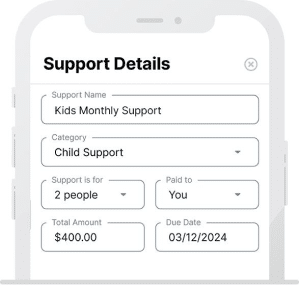
SupportPay helps people manage, track, and document family-related financial responsibilities. For someone dealing with wage garnishment, that recordkeeping can be powerful. Instead of letting pay stubs, agency notices, emails, and payment histories sit in separate places, SupportPay can help organize the financial story in one system.
With SupportPay, users can document obligations, upload proof such as pay stubs or orders, track payment activity, maintain records, and preserve the history of what has been paid. For eligible users who opt in, SupportPay Credit Boost can help report qualifying positive payment activity so verified payments may become part of a credit-building record.
The message is simple: if money is already being withheld, the payment history should not stay invisible. SupportPay is not a legal service and does not guarantee a specific credit score increase, savings amount, or garnishment outcome. But it can help users get organized, preserve proof, and make eligible responsible payments more visible.
Why eligible payment reporting matters
Credit scores can affect the cost of life. Better credit may influence loan approvals, interest rates, apartment applications, deposits, insurance pricing where allowed, and access to financial products. The value is not simply the score itself. The value comes when a stronger credit profile helps someone qualify for better options.
For example, SupportPay materials show that moving from near-prime to prime credit on a $25,000 used car loan over 60 months could reduce an estimated monthly payment from about $578 to about $520, based on example APRs of 13.74% versus 9.06%. That is roughly $59 per month, about $704 per year, and more than $3,500 over the life of the loan. Results vary, and this is an example, not a promise.
The key point is that consistent payments may have financial value if they help build a stronger credit profile. If wage garnishment payments are already happening, documenting them and exploring eligible positive reporting can be an important step toward recovery.
Wage garnishment documentation checklist
Save the original garnishment or income withholding order
Identify the court, agency, creditor, or recipient
Record the case number or account number
Save every pay stub showing the deduction
Track each pay date and amount withheld
Compare payroll deductions to agency or creditor records
Save balance statements and payment histories
Keep written notes from calls and emails
Store any modification, release, or termination notice
Upload records into SupportPay if you want a more organized payment history
You Are Already Paying. Make It Count.
There is something deeply unfair about wage garnishment that most people feel but rarely say out loud: you are doing the right thing, and nobody seems to notice.
The money leaves your paycheck. Every pay period. Without fail. You did not choose the timing. You did not set the amount. You do not get a thank-you note, a receipt in the mail, or a notification that says “payment received, balance updated, credit improved.” The system takes the money and moves on. But you still have to figure out how to cover rent, keep the lights on, feed your kids, put gas in the car, and somehow hold everything together on what is left.
And here is the part that makes it worse: all of that financial responsibility — all of those consistent, verified, on-time payments — may not be helping your credit score at all. Not because you are doing anything wrong. But because the system was never built to recognize what you are doing right.
That is the problem SupportPay was created to solve.
Not the garnishment itself. Not the court order. Not the legal process. SupportPay cannot change any of that. But SupportPay can help make sure the payments you are already making do not just vanish into a system that forgets them. It can help you organize your records, document your payment history, upload your proof, and — for eligible users who opt in — report qualifying positive payment activity through Credit Boost so that your consistency may finally start working in your favor.
You did not ask to be in this situation. But you are showing up anyway. Every paycheck. Every deduction. Every month.
That should mean something. With the right documentation and the right tools, it can.
Start Now
If wages are already being withheld from your paycheck, do not let another pay period pass without a record. SupportPay helps you organize wage garnishment documentation, track what has been paid, upload proof, and explore whether your eligible payments can support your credit recovery. The money is already leaving your paycheck. It is time to make sure it counts.
Wage garnishment can feel discouraging because it reduces your paycheck before you ever see the money. But the payments still matter. They are part of your financial record, and they may be important for proving what was paid, correcting errors, resolving balances, communicating with agencies, and rebuilding financial stability.
If your wages are being garnished, start by getting organized. Save your orders, pay stubs, notices, payment histories, and balance statements. Track every deduction. Compare your records regularly. And if your payments are eligible, consider whether SupportPay Credit Boost can help make your positive payment activity visible.
You may not be able to control every part of wage garnishment, but you can control how well you document it. That documentation can be the first step toward turning a painful payroll deduction into a clearer path forward.
Call to action
If wages are already being withheld from your paycheck, do not let that payment history go unused. SupportPay helps you organize wage garnishment records, upload proof, track payment history, and explore whether eligible positive payments can support your credit recovery. Start documenting your payments today so your financial responsibility is easier to prove and harder to overlook.
FAQ: Wage Garnishment
What is wage garnishment in simple terms?
Wage garnishment means money is legally withheld from your paycheck and sent to a court, agency, creditor, support agency, tax authority, or other authorized recipient before the rest of your paycheck is paid to you.
Is wage garnishment the same as a payroll deduction?
No. A normal payroll deduction may be voluntary, such as a benefit or retirement contribution. Wage garnishment is usually required by a court, agency, legal order, or government authority.
How much of my paycheck can be garnished?
It depends on the type of obligation, disposable earnings, federal law, state law, exemptions, dependents, arrears, and the specific order. Consumer debt garnishments are often limited differently than child support, taxes, or student loan garnishments.
Can wage garnishment hurt my credit score?
The garnishment itself may not always appear the same way on a credit report, but the underlying debt, delinquency, collection, judgment, or missed payments may affect credit. The frustrating part is that ongoing garnishment payments may not automatically build positive credit history.
Can wage garnishment payments help my credit?
They usually need to be documented and reported as eligible positive payment activity to help. SupportPay Credit Boost is designed to help eligible verified payments become more visible as positive payment activity. Results vary, and no specific score increase is guaranteed.
Can my employer stop a garnishment if I ask?
Usually no. Employers generally need an official release, modification, termination notice, or other instruction from the court, agency, creditor, or issuing authority before they can stop withholding.
What should I do first if my wages are garnished?
Read the order, identify who issued it, save every pay stub, track each deduction, and compare your records to agency or creditor payment histories. If anything looks wrong, contact the appropriate court, agency, creditor, payroll department, or attorney.
Does SupportPay provide legal advice or stop garnishments?
No. SupportPay is not a legal service and does not control courts, agencies, creditors, or employers. SupportPay helps users organize records, track payment activity, upload proof, and explore eligible positive credit reporting.