
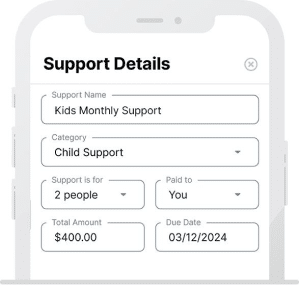
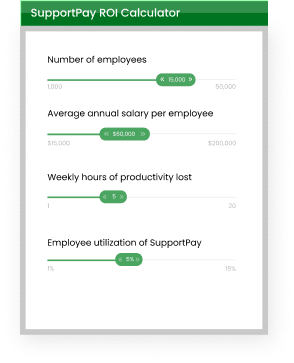


Child support wage garnishment can take a significant portion of every paycheck, but those payments may not automatically appear as positive credit history. Learn why this credit gap exists, what records to keep, and how SupportPay Credit Boost may help eligible verified payments become visible.
The payment is real. The credit may not be.
Child support wage garnishment can be one of the largest recurring payments in a person’s financial life. For some parents, the deduction happens every paycheck. It may continue for months or years. It may represent hundreds or even thousands of dollars each month. It is consistent. It is documented. It is required. And yet, in many cases, it does not automatically help build positive credit history.
That is the frustrating part.
A parent may be paying child support through wage withholding every two weeks. The money leaves their paycheck before they ever see it. Payroll records the deduction. A state child support agency or other payment system may receive the funds. The payment may support children, cover an obligation, reduce arrears, or satisfy a court order. But when that parent applies for an apartment, car loan, credit card, mortgage, utility account, or insurance policy where credit is considered, those consistent payments may not be reflected as positive credit activity.
In other words, the system may see the obligation when something goes wrong, but fail to recognize the responsibility when payments are made on time.
That is the missing credit problem.
This article explains how child support wage garnishment works, why on-time child support payments often do not automatically build credit, why positive payment history matters, what records parents should keep, and how SupportPay can help eligible verified payments become more organized, visible, and potentially credit-building.
What is child support wage garnishment?
Child support wage garnishment, often called income withholding, is a process where child support payments are deducted directly from a parent’s paycheck and sent to the appropriate agency, state disbursement unit, court, or recipient according to the support order.
In simple terms, child support wage garnishment means the payment comes out before the parent receives the rest of their paycheck. The parent does not manually choose the payment date each month. The employer is required to follow the income withholding order and send the withheld amount where the order instructs.
This type of wage withholding is common in child support cases because it creates a structured payment process. It can help ensure payments are made regularly and reduce the risk of missed manual payments. But automatic does not always mean simple. Parents still need to understand what is being withheld, where the money is going, whether payments are credited correctly, and whether the payment history is being documented in a way that can support their financial future.
Why child support garnishment is different from ordinary debt
Child support is not the same as a credit card balance, personal loan, auto loan, or medical bill. It is a family-related legal obligation. The purpose is to support a child’s needs, which may include housing, food, clothing, education, healthcare, childcare, transportation, and other essential costs.
Because child support is tied to family law and the well-being of children, the rules can be different from ordinary consumer debt. Child support orders may involve courts, state agencies, child support enforcement offices, employers, payroll departments, and state disbursement units. Payments may be withheld from wages, paid through an agency portal, made directly between parents, or handled through another approved method depending on the order.
That complexity is one reason records matter so much. A parent may know money is being withheld, but if the receiving agency or system does not update correctly, the parent may still need proof. Pay stubs, income withholding orders, agency statements, balance records, and payment histories can all become important.
How much income can child support wage garnishment take?
Child support wage garnishment can be much larger than many other types of wage garnishment. The exact amount depends on the order, disposable earnings, whether the parent is supporting another spouse or child, whether there are arrears, how far behind payments may be, and applicable federal and state rules.
In some situations, child support or alimony garnishment can reach 50% to 60% of disposable earnings, and it can be higher in certain cases if payments are more than 12 weeks behind. This is very different from many ordinary consumer debt garnishments, which are often subject to lower limits.
| Garnishment type | Common range | Why it matters |
|---|---|---|
| Ordinary consumer debt | Often up to 25% of disposable earnings | Usually tied to a judgment and subject to state protections |
| Child support or alimony | Often 50%–60% of disposable earnings | May be higher in some cases, especially with arrears |
| Federal student loans | Generally up to 15% administratively | Borrower protections and rules may apply |
| Federal taxes | Varies | Depends on IRS calculations, filing status, dependents, and exemptions |
This article is informational and not legal advice. If you have questions about your specific order, garnishment limit, arrears balance, modification options, or rights, contact the court or agency listed on your order, your payroll department for administrative questions, or a qualified attorney.
The unfair credit gap in child support payments
Here is the issue many paying parents face: child support payments can be required, recurring, and substantial, but they may not automatically build positive credit history.
That creates a one-sided experience. If payments are missed, unpaid child support can create serious consequences. Depending on the situation, those consequences may include enforcement actions, license issues, tax refund intercepts, contempt proceedings, additional fees, or negative credit reporting. But when payments are made consistently and on time, that positive behavior may not show up in the same way a credit card or loan payment might.
This is the credit gap.
A parent can be financially responsible every month and still not receive credit recognition for it. They can pay through wage garnishment for years and still have those payments remain largely invisible to traditional credit scoring systems.
That matters because child support may be one of the largest financial obligations in that parent’s life. If a person pays $750 per month, that is $9,000 per year. Over four years, that is $36,000. If that payment history is not visible as positive credit activity, the parent may be missing out on recognition for a major part of their financial life.
Does child support automatically help your credit score?
Often, no. On-time child support payments generally do not automatically build credit in the same way that on-time payments on credit cards, auto loans, mortgages, or student loans can.
That does not mean child support never appears in a credit-related context. Negative child support information or arrears may be reported in some circumstances. But the key problem is that positive, on-time child support payments are often not automatically reported as credit-building activity.
This is confusing for parents because the payment pattern may look exactly like the kind of behavior credit scoring models are designed to measure: recurring payments, made consistently, tied to a real obligation, over a long period of time.
The problem is not that the payments are unimportant. The problem is that they are often not structured and reported in a way that credit systems can recognize positively.
Why positive payment history matters so much
Payment history is commonly considered one of the most important factors in credit scoring. Lenders want to know whether someone pays obligations reliably over time. Consistent payment behavior can signal responsibility, predictability, and lower risk.
That is why it can feel so unfair when child support payments are excluded from positive credit recognition. A parent may be making one of the most important payments in their life every month, but traditional credit systems may still focus more heavily on credit cards, loans, and other conventional accounts.
Positive payment history matters because it can influence financial access. Better credit may help someone qualify for better interest rates, lower deposits, better approval odds, and more affordable options for transportation, housing, utilities, insurance where allowed, and emergency credit.
The value is not just the score. The value is what a stronger credit profile may make possible.
Why child support payments are strong financial responsibility signals
Child support payments can demonstrate several qualities that credit systems are intended to measure:
- Consistency: Payments often happen every pay period or every month.
- Duration: Support obligations may continue for years.
- Real financial commitment: The payments are tied to a legal and family responsibility.
- Documented activity: Wage withholding creates pay stub records, employer records, and agency histories.
- Meaningful dollar amounts: Child support payments can represent a significant share of income.
For example, a parent paying $600 per month through child support wage garnishment is paying $7,200 per year. Over five years, that is $36,000. That payment history says something about financial behavior. Without positive reporting, however, it may not help the parent’s credit profile.
Example: $36,000 in payments with no credit recognition
Consider a parent named Marcus. Marcus has a child support order that started four years ago. His employer withholds $750 per month from his paycheck and sends it through the required child support system. Marcus has paid consistently through wage withholding.
Over four years, Marcus has paid:
| Monthly payment | Time period | Total paid |
|---|---|---|
| $750 | 12 months | $9,000 |
| $750 | 24 months | $18,000 |
| $750 | 48 months | $36,000 |
Marcus may assume that because the payments are official and automatic, they are helping his credit. But unless those payments are reported as eligible positive payment activity, they may not appear as positive credit history.
Now imagine Marcus needs to buy a used car to get to work. His credit profile may affect his interest rate. If his child support payment history is invisible, a major part of his financial responsibility is missing from the picture.
This is exactly why documentation and eligible reporting matter. Marcus is already doing the hard part. The question is whether the record is organized and visible enough to work in his favor.
How child support wage garnishment may affect credit indirectly
Even when child support payments are not reported positively, wage garnishment can affect credit indirectly. The deduction reduces take-home pay, which may make it harder to stay current on other bills. If a parent has less cash available after garnishment, they may rely more on credit cards, overdrafts, payday loans, or delayed payments.
That can create a financial spiral. The parent is paying child support, but the reduced paycheck makes it harder to pay rent, utilities, car insurance, or other obligations. If those bills fall behind, credit may suffer.
This is another reason child support wage garnishment credit recognition matters. If a parent is already making consistent verified payments, those payments may be part of the recovery story. Without positive reporting, the financial pressure is visible, but the responsibility may not be.
What SupportPay Credit Boost is designed to do
SupportPay Credit Boost is designed to help eligible users receive credit recognition for qualifying positive payment activity tied to real family financial responsibilities. That can include payments made through SupportPay and, when eligible and properly documented, wage garnishment or support-related payment activity.
The idea is simple: families are already managing major financial responsibilities across households. Parents are paying child support. Co-parents are sharing expenses. Caregivers are reimbursing family members. People are covering medical costs, childcare, school expenses, and recurring family obligations. Many of those payments do not fit neatly into traditional credit systems.
SupportPay helps turn those real-life payments into organized records. For eligible users who opt in, qualifying positive payment activity may be reported so that responsible payments can become more visible.
SupportPay does not guarantee a specific credit score increase, approval, interest rate, or savings amount. Results vary based on the user’s credit profile, bureau processing, credit model, and other activity on the credit file. But SupportPay can help address the missing credit problem by organizing and reporting eligible positive payment behavior.
SupportPay reports positive payment activity only
One of the biggest concerns people have is whether reporting payments could hurt their credit. SupportPay’s Credit Boost messaging is based on positive-only reporting for eligible verified payments.
That means SupportPay is not designed to report missed payments as negative activity through Credit Boost. It is designed to help eligible positive payments count. If qualifying payments stop, progress may pause, but SupportPay’s reporting itself is intended to focus on positive payment behavior.
This distinction matters because many parents are understandably cautious about anything involving credit bureaus. They do not want to create a new risk. They do not want a new loan. They do not want another credit card. They simply want recognition for payments they are already making.
That is the core promise: no new debt, no hard inquiry, and no need to open a credit card just to start building recognition from real payments.
Do you need a hard inquiry or new credit card?
No. SupportPay Credit Boost is not a credit card, not a loan, and not an application for new credit. Reporting eligible payment activity does not require a hard inquiry because a hard inquiry generally happens when someone applies for credit.
This is important for parents trying to rebuild. Applying for too many new credit accounts can sometimes create temporary score pressure through hard inquiries or new account activity. SupportPay’s approach is different. It is based on verified payments tied to real obligations, not new borrowing.
For someone paying child support through wage garnishment, this can be especially important. The parent may already be under financial pressure. They may not want or qualify for new credit. SupportPay focuses on making existing responsible payment behavior visible instead.
Why the obligation start date matters
One of the most powerful details in child support payment reporting is the obligation start date. If a child support order began years ago, the accurate start date may help reflect a longer financial history than simply using the date someone joined SupportPay.
Length of credit history is an important credit factor. Credit systems often consider how long accounts or obligations have existed. If a parent has been paying a support obligation for years, that history may matter when properly documented and eligible for reporting.
For example, if a child support order started three years ago and the parent begins using SupportPay today, the important date may not simply be today. The original obligation start date may help show that the responsibility has existed longer.
Accuracy matters. The obligation start date should be based on real documentation, such as a court order, child support order, income withholding order, agency record, or other reliable proof. Do not guess or inflate the date. Use the actual date the obligation began.
How child support payments may support credit score factors
When eligible child support payment activity is properly documented and reported, it may support several credit-related areas.
| Credit factor | Why it matters | How eligible support payments may help |
|---|---|---|
| Payment history | Often the largest credit score factor | Recurring verified payments can show consistency |
| Length of history | Longer histories can be beneficial | The accurate obligation start date may reflect a longer timeline |
| Credit mix | Different types of accounts may strengthen a profile | Reported family support activity may add another type of financial obligation |
| New credit and inquiries | Hard inquiries can create temporary pressure | SupportPay does not require a hard inquiry or new credit card |
Again, credit outcomes vary. A payment history that helps one person may have a different effect for another depending on the full credit file. Collections, late payments, utilization, account age, and other factors can all influence the final result.
What records should you keep for child support wage garnishment?
If child support is being withheld from your paycheck, keep a clean record from the beginning. Even if payments seem automatic, errors can happen. A payment can be delayed, credited to the wrong case, applied incorrectly, or omitted from a balance update.
Save the following:
- The child support order
- The income withholding order or wage garnishment notice
- Every pay stub showing the child support deduction
- Year-to-date payroll records showing total withheld
- Agency payment history
- State disbursement unit records, if available
- Balance or arrears statements
- Proof of the original obligation start date
- Modification orders, if the support amount changed
- Any release, satisfaction, termination, or updated withholding notice
- Emails, letters, and written notes from calls
Do not rely only on your employer, agency, or payroll portal to preserve records forever. Systems change. Employers switch payroll providers. Online portals can remove older documents. Download and store your own copies.
Child support documentation checklist
Save the original child support order
Save the wage garnishment or income withholding notice
Record the case number or account number
Download every pay stub showing the deduction
Save agency payment histories
Save balance or arrears statements
Document the original obligation start date
Keep copies of modification or termination notices
Upload records into SupportPay if you want a more organized history
Review whether eligible payments may qualify for Credit Boost
How to tell if your child support payments are being credited correctly
Start with your pay stub. Identify the child support deduction line and record the amount withheld for each pay period. Then compare that amount to the agency or state payment history. The dates may not match exactly because payroll withholding and agency posting can happen on different schedules, but the amounts should make sense over time.
A simple tracking table can help:
| Pay date | Amount withheld | Agency posted date | Amount credited | Proof saved? |
|---|---|---|---|---|
| Example: July 15 | $375 | July 18 | $375 | Yes |
| Example: July 31 | $375 | August 3 | $375 | Yes |
If the withheld amount and credited amount do not match, gather your records before calling. You will want the pay date, employer name, amount withheld, case number, agency account number, and any confirmation or statement showing the issue.
Common child support payment record problems
Child support systems are designed to track payments, but mistakes and delays can still happen. Watch for these issues:
- Payment posting delays: Money may be withheld from payroll before it appears in the agency system.
- Wrong case number: A payment may be applied to the wrong account or case.
- Incorrect arrears balance: The balance may not reflect recent payments or modifications.
- Duplicate withholding orders: Multiple orders can confuse payroll or agency records.
- Employer transition problems: Switching jobs can interrupt withholding or create gaps in records.
- Payroll provider changes: Employer payroll system changes can make older records harder to retrieve.
- Order modification delays: A changed support amount may not be reflected immediately in payroll withholding.
If something looks wrong, do not wait. Contact the agency, court, payroll department, or appropriate professional. SupportPay can help you organize proof, but official corrections must be handled by the court, agency, employer, or entity responsible for the records.
Can child support wage garnishment help your credit?
Child support wage garnishment can potentially support credit-building when eligible payments are properly documented and reported as positive payment activity. The garnishment itself does not automatically guarantee a credit benefit. The key is whether the payment activity becomes visible to credit systems in a structured, accepted, and eligible way.
That means three things matter:
- The payment must be real. There should be proof that money was withheld or paid.
- The payment must be tied to a valid obligation. Documentation should show what the payment was for.
- The payment must be eligible for reporting. Not every payment or situation may qualify.
SupportPay helps by organizing documentation and supporting eligible positive payment reporting for users who opt in. If you are already paying through wage garnishment, your pay stubs and support records may help create the verified history needed to make those payments count.
What SupportPay can and cannot do
SupportPay can help you organize records, document payments, upload proof, track obligations, preserve payment history, and explore eligible positive reporting through Credit Boost.
SupportPay cannot provide legal advice, change a court order, stop a wage garnishment, force an agency to update a balance, guarantee bureau acceptance, guarantee a score increase, or promise a specific loan approval or savings amount.
That distinction is important. SupportPay is not replacing the legal or child support system. It is helping users create a clearer financial record and, where eligible, make positive payment activity more visible.
Why this matters for co-parents
Child support can be emotionally charged. One parent may feel they are paying a lot. The other parent may feel the money is still not enough to cover the true cost of raising a child. Disagreements can arise over whether payments were made, whether expenses were shared, whether reimbursements happened, or whether records are accurate.
SupportPay helps reduce confusion by creating a structured place to track family financial responsibilities. Clear records can lower conflict because both sides can refer to documentation rather than memory, screenshots, scattered texts, or incomplete bank statements.
For the paying parent, organized records may help show consistency. For the receiving parent, clear records may reduce disputes and make it easier to understand what has been paid. For both households, better documentation can support trust, clarity, and fewer financial arguments.
Why this matters for employers
Employers often process child support wage garnishments as payroll compliance tasks. Payroll receives the order, calculates withholding, sends payments, and maintains records. But for the employee, the deduction may be part of a much larger financial stress story.
Employees with wage garnishments may have reduced take-home pay, higher stress, credit challenges, and more difficulty affording transportation, housing, childcare, or emergencies. Those pressures can show up at work as distraction, absenteeism, payroll questions, HR escalations, or turnover risk.
SupportPay can help employers offer a more practical financial wellness layer. Instead of only processing the garnishment, employers can help employees document payment history and potentially receive credit recognition for eligible payments they are already making. That does not require employees to borrow more money. It helps them make responsible existing payments count.
A better way to think about child support and credit
Traditional credit systems often ask: Do you pay credit accounts on time?
But many real-life financial responsibilities are not credit accounts. Parents support children. Families share expenses. Caregivers reimburse each other. Co-parents split medical bills, school costs, childcare, and transportation. These payments can be essential, recurring, and financially meaningful, but they often do not show up as positive credit activity.
A better question is: Are you consistently meeting real financial responsibilities?
That is where child support payment history matters. It reflects real money, real obligations, and real responsibility. If eligible payments can be organized and reported properly, they may help credit systems better reflect a person’s actual financial behavior.
You are already supporting your child. Do not let the record disappear.
If child support is being withheld from your paycheck, you are already making an important payment. The money is leaving your paycheck. The obligation is being addressed. The record should not disappear into payroll systems, agency portals, and paperwork you cannot easily access.
Start by getting organized. Save your child support order, income withholding notice, pay stubs, agency payment histories, balance statements, and proof of the original obligation start date. Compare what payroll withholds against what the agency credits. If something is wrong, use your records to ask better questions.
Then take the next step: explore whether your eligible verified payments can support your credit recovery through SupportPay Credit Boost.
You are already doing the hard part. You are paying. You are showing up. You are supporting your child. With the right documentation and the right tools, that responsibility may finally become easier to prove — and harder for the financial system to overlook.
Start now
If child support is already being withheld from your paycheck, do not wait until there is a dispute to build your record. SupportPay helps you organize child support wage garnishment documentation, upload proof, track payment history, document the obligation start date, and explore whether eligible positive payments can support your credit profile. The payments are already happening. It is time to make them count.
FAQ: Child Support Wage Garnishment and Credit
Does child support automatically build credit?
Often, no. On-time child support payments may not automatically appear as positive credit history unless they are reported through a system designed to report eligible positive payment activity.
Can child support wage garnishment help my credit score?
It may help if the payments are eligible, verified, properly documented, and reported as positive payment activity. Wage garnishment alone does not guarantee a credit score increase. Results vary.
Can missed child support hurt credit?
Missed or unpaid child support can have serious consequences and may affect credit in some circumstances. The frustrating gap is that on-time payments may not automatically create positive credit history.
Does SupportPay report missed child support payments?
SupportPay Credit Boost is positioned as positive-only reporting for eligible verified payments. It is designed to help responsible payment activity count, not to report missed payments through Credit Boost.
Do I need to open a credit card to use Credit Boost?
No. SupportPay Credit Boost is not a credit card or loan. It is based on eligible payment activity tied to real financial responsibilities.
Will Credit Boost create a hard inquiry?
No. Reporting eligible payment activity through SupportPay does not require a hard inquiry because you are not applying for new credit.
Why does the child support obligation start date matter?
The accurate obligation start date may help reflect a longer payment history. If your support order began years ago, that date may be relevant when properly documented and eligible for reporting.
What documents should I upload for child support wage garnishment?
Helpful records may include the child support order, income withholding order, pay stubs, agency payment history, balance statements, proof of the original obligation start date, and any modification or release notices.
Can SupportPay stop my child support garnishment?
No. SupportPay is not a legal service and cannot change, stop, or modify a court or agency order. It helps users organize records, document payment history, and explore eligible positive credit reporting.
Do both parents need to use SupportPay?
SupportPay can still be useful even if only one parent uses it for documentation and payment history. When both parents use structured records, it may also reduce confusion and disputes.