


The visible cost of wage garnishment is the deduction on your pay stub. The hidden cost is everything that happens after take-home pay drops: late fees, higher interest, limited credit access, transportation challenges, housing stress, and emotional pressure.
The Deduction Is Only the Beginning
The hidden cost of wage garnishment is not always obvious at first. The visible cost is the amount deducted from your paycheck. You can see it on your pay stub. You can calculate how much was withheld. You can watch your net pay shrink.
But the real cost often goes much deeper than that deduction.
When money is taken from your paycheck before it reaches your bank account, every other part of your financial life has to adjust. Rent does not get cheaper. Groceries do not cost less. Gas prices do not fall because your paycheck is smaller. Childcare, medical bills, utilities, insurance, and transportation still have to be paid.
That is where the hidden cost begins. Wage garnishment can create late fees, overdrafts, higher credit card balances, missed savings, more expensive borrowing, housing challenges, transportation problems, workplace stress, and long-term financial instability. Even when the garnishment payment is being made every pay period, the employee may still feel like they are falling behind.
This article explains the hidden cost of wage garnishment for employees, why the impact is bigger than the amount deducted, how garnishment can affect credit access and everyday expenses, and how SupportPay can help users organize records, document payment history, and explore whether eligible verified payments can support financial recovery.
What is wage garnishment?
Wage garnishment is a legal or administrative process that requires an employer to withhold part of an employee’s earnings and send that money to a court, agency, creditor, child support office, tax authority, or other authorized recipient.
In simple terms, wage garnishment means money comes out of your paycheck before you receive the rest. The deduction may be tied to child support, spousal support, unpaid taxes, student loans, consumer debt judgments, medical debt judgments, or another legal obligation.
Once a wage garnishment order is active, the employee usually cannot simply ask payroll to stop it. Employers generally must follow the order until they receive official instructions to modify, release, or terminate the garnishment.
That is why the paycheck impact can feel so severe. The deduction happens automatically, but the employee is left to manage the consequences manually.
Cost 1: Reduced take-home pay
The first and most obvious cost of wage garnishment is reduced take-home pay. If $300, $500, or more is withheld from each paycheck, the employee has less money available for everything else.
For someone with a comfortable emergency fund, that may be difficult but manageable. For someone already living paycheck to paycheck, it can become a financial crisis almost immediately.
Consider a worker who is paid twice per month and has $350 withheld from each paycheck. That is $700 per month in reduced take-home pay. Over a year, that is $8,400 that never reaches the household budget.
| Garnishment amount | Pay frequency | Monthly impact | Annual impact |
|---|---|---|---|
| $150 | Twice per month | $300 | $3,600 |
| $250 | Twice per month | $500 | $6,000 |
| $350 | Twice per month | $700 | $8,400 |
| $500 | Twice per month | $1,000 | $12,000 |
That reduction can affect rent, groceries, transportation, utilities, childcare, school expenses, medical care, and emergency savings. The garnishment may be connected to one obligation, but the paycheck reduction affects the entire household.
Cost 2: Less flexibility when emergencies happen
One of the most overlooked wage garnishment costs is the loss of flexibility.
When money is not garnished, an employee can decide how to prioritize expenses during a difficult month. If a car breaks down, they might delay a discretionary purchase. If a child needs school supplies, they might adjust another category. If a medical bill arrives, they might spread out payments.
Wage garnishment removes some of that decision-making power because the money is withheld before the employee can budget. The payment may be required, but the timing does not always match real life.
That loss of flexibility can be especially stressful when unexpected expenses appear, such as:
- Car repairs needed to get to work
- Medical bills or prescriptions
- Childcare changes
- Higher utility bills
- School fees or supplies
- Emergency travel
- Rent increases
- Reduced hours or missed shifts
Without flexibility, employees may be forced into more expensive choices, such as overdrafts, credit cards, payday loans, or late payments.
Cost 3: More reliance on expensive credit
When a paycheck shrinks, many people turn to credit just to cover basic expenses. That can create another hidden cost of wage garnishment: expensive borrowing.
An employee may use a credit card for groceries, gas, utilities, or childcare because the cash that would have covered those expenses was withheld. If the balance cannot be paid in full, interest begins to grow. If the card is already near its limit, the employee’s credit utilization may increase, which can put additional pressure on credit scores.
Other expensive options may include overdraft fees, payday loans, high-cost installment loans, title loans, or borrowing from friends and family. Each option can create new stress.
The result can feel backwards. Wage garnishment is supposed to satisfy an obligation, but the reduced paycheck may force the employee into new debt just to survive the month.
Cost 4: Credit may not improve even when payments are being made
One of the most frustrating hidden costs is the invisible-payment problem.
Wage garnishment may prove that money is being paid consistently. The deduction appears on pay stubs. The employer withholds the amount. A court, agency, creditor, or child support office may receive the funds. The payment may happen every pay period for months or years.
But those payments may not automatically appear as positive payment history on a credit report.
That matters because payment history is commonly one of the most important credit score factors. If an employee is making regular payments through wage garnishment, that consistency may show financial responsibility. But if the payments are not documented and reported as eligible positive payment activity, the employee may be paying without receiving credit recognition.
This creates a painful gap: the negative event that led to the garnishment may affect credit, while the ongoing payments may remain invisible.
Cost 5: Bad credit can make transportation more expensive
Transportation is one of the most practical ways credit affects everyday life. Many employees need a reliable car to get to work, take children to school, attend medical appointments, or manage family responsibilities.
If wage garnishment reduces take-home pay and credit remains weak, transportation can become more expensive in several ways:
- Higher auto loan interest rates
- Larger down payment requirements
- Difficulty qualifying for reliable financing
- Higher insurance costs where credit-based pricing is allowed
- Greater risk of relying on older vehicles with higher repair costs
For example, SupportPay materials show that moving from near-prime to prime credit on a $25,000 used car loan over 60 months could reduce an estimated monthly payment from about $578 to about $520, based on example APRs of 13.74% versus 9.06%. That is roughly $59 per month, about $704 per year, and more than $3,500 over the life of the loan.
This is only an example. Results vary, and no credit score increase, approval, interest rate, or savings amount is guaranteed. But the example shows why credit recovery can matter. Better credit may reduce the cost of transportation, and transportation can affect job stability.
Cost 6: Housing and deposits can become harder
Credit can also affect housing and basic services. Depending on the situation, landlords may review credit during rental applications. Utility companies may require deposits. Cell phone providers may check credit. Insurance pricing may be affected by credit in some states and circumstances.
When wage garnishment reduces cash flow and credit remains damaged or thin, these everyday costs can become harder to manage.
For example, an employee may need to move closer to work or find a more affordable apartment. If credit is weak, they may face higher deposits, fewer housing options, or additional approval hurdles. If a utility company requires a deposit, that can create another upfront cost at the exact moment cash is already tight.
Again, the hidden cost is not just the garnishment deduction. It is the chain reaction that happens when reduced income and limited credit options collide.
Cost 7: Late fees, overdrafts, and missed opportunities
Small fees can become big problems when money is tight. A reduced paycheck may cause bills to be paid late or automatic payments to overdraft. A single late fee may not seem huge, but repeated fees can add up quickly.
| Hidden cost | How it can happen | Why it matters |
|---|---|---|
| Late fees | Bills are paid after the due date because cash is short | Fees reduce next month’s available income |
| Overdraft fees | Automatic payments hit before payday | Bank fees can create a cycle of negative balances |
| Higher interest | Credit card balances increase | More income goes to interest instead of essentials |
| Missed savings | Emergency funds are paused or depleted | The next emergency becomes harder to handle |
| Missed opportunities | Training, relocation, repairs, or deposits become unaffordable | Financial recovery may take longer |
These costs may not show up on the garnishment order, but they are real. They affect the employee’s ability to stabilize and recover.
Cost 8: Emotional and workplace stress
Wage garnishment can carry emotional weight. Employees may feel embarrassed that payroll knows about a personal financial issue. They may feel anxious every payday. They may worry about rent, food, transportation, children, co-parents, creditors, or court notices.
That stress does not stay at home. It can follow employees into the workplace.
Financial stress may contribute to distraction, absenteeism, lower productivity, turnover risk, and more questions for HR or payroll teams. An employee may need to take calls during work hours, attend hearings, request documents, or handle agency issues. They may miss work because they cannot afford gas, childcare, or car repairs after the deduction.
This does not mean employees should be judged for having a garnishment. It means wage garnishment is not just a payroll transaction. It is often a financial wellness issue.
Why the hidden cost can last longer than the garnishment
Even after a garnishment ends, the financial effects may continue. Credit card balances may remain. Late fees may have created new debt. Savings may be depleted. A car may have been repaired with high-interest credit. Housing options may have been limited. Stress may have affected work or family relationships.
That is why documentation and credit recognition matter during the garnishment, not only after it ends.
If payments are already being made, employees should preserve the record. Those records may help with balance disputes, agency questions, release requests, court communications, and eligible positive payment reporting.
The sooner the payment history is organized, the easier it may be to use that history as part of a recovery plan.
Example calculation: the hidden cost of reduced credit access
Imagine an employee named Andre. Andre has $400 withheld from each paycheck twice per month, reducing his monthly take-home pay by $800. Because his budget is tight, he uses a credit card for groceries and gas. Over time, his balance grows to $5,000.
If Andre pays a higher APR because his credit profile is weak, interest can become another hidden cost. A simple way to estimate possible annual interest savings is:
Annual savings = balance × APR reduction
If Andre has a $5,000 balance and later qualifies for a rate that is 5 percentage points lower, the potential annual interest difference could be about $250, depending on repayment behavior.
This example is not a guarantee. Credit card interest depends on daily balances, payments, fees, APR, and account terms. But it shows how credit improvement may matter beyond a score. Better credit may help reduce real costs.
How SupportPay helps reduce the hidden cost
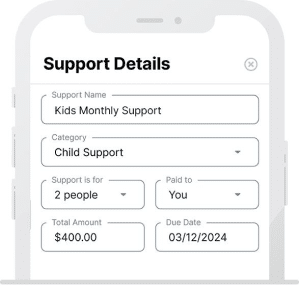
SupportPay helps users organize and document family-related financial responsibilities, including support payments, shared expenses, and eligible wage garnishment-related records. For someone dealing with garnishment, that recordkeeping can be a meaningful step toward financial recovery.
SupportPay can help users:
- Upload proof such as pay stubs, orders, notices, and payment histories
- Track recurring obligations and payment activity
- Document the original obligation start date
- Preserve records in one organized place
- Compare what was withheld against what was credited
- Explore whether eligible verified payments can support positive credit reporting through Credit Boost
SupportPay is not a legal service, debt relief company, loan, credit card, or payday product. It does not stop garnishments, change court orders, guarantee score increases, or promise savings. Instead, it helps users organize proof and make eligible responsible payments more visible.
Why positive reporting matters when money is already being withheld
The strongest message is simple: if you are already paying, the payment history should not disappear.
Wage garnishment can feel punitive because the money is taken before it reaches you. But the payment itself may still show consistency. If that payment is eligible, verified, and reported as positive activity, it may help support a broader credit recovery path.
SupportPay Credit Boost is designed to help eligible positive payments count. It does not require a hard inquiry or new credit card. It is not about encouraging more debt. It is about helping responsible payments that are already happening become easier to recognize.
Results vary. Credit outcomes depend on the user’s full credit profile, bureau processing, scoring model, and other activity. But for employees whose payments have been invisible, getting organized is an important first step.
What employees should do now
If your wages are being garnished, start by building a record. Do not wait until there is a balance dispute, missing payment, release issue, or credit question.
- Find the original order. Identify the issuing court, agency, creditor, or authority.
- Save every pay stub. Keep proof of each garnishment deduction.
- Track each payment. Record the pay date, amount withheld, recipient, and case number.
- Compare records. Match payroll deductions to agency, creditor, or child support payment histories.
- Save balance statements. Keep proof of how the balance changes over time.
- Document communication. Save emails, letters, and notes from calls.
- Upload proof into SupportPay. Keep records organized and easier to access.
- Review Credit Boost eligibility. Explore whether eligible verified payments can support positive reporting.
Wage garnishment documentation checklist
Save the original garnishment or income withholding order
Record the case number, account number, or order number
Save every pay stub showing the deduction
Track each pay date and amount withheld
Save agency, creditor, or child support payment histories
Compare withheld amounts to credited amounts
Save balance statements and year-to-date payroll totals
Keep release, modification, or termination notices
Upload proof into SupportPay for organized recordkeeping
Check whether eligible payments may qualify for Credit Boost
The hidden cost is real — but the record can help
Wage garnishment can feel like a financial setback that never gets recognized. The money leaves your paycheck. Your budget gets tighter. Your stress increases. Your credit may not improve. Your options may become more expensive. And still, you are paying.
That payment history matters.
The problem is that it may not matter to the systems that affect your financial future unless it is documented, organized, and, when eligible, reported as positive payment activity.
You may not be able to control every part of wage garnishment. But you can control how well you document it. You can save the proof. You can track the payments. You can compare the records. You can make sure the money already leaving your paycheck is easier to prove and harder to overlook.
Start Now
Do not only focus on the deduction. Focus on the record. If money is already being withheld from your paycheck, SupportPay can help you organize wage garnishment records, upload proof, track payment history, document obligation start dates, and explore whether eligible verified payments can support your credit recovery. The hidden cost of wage garnishment is real. Your payment history should be real too.
FAQ: The Hidden Cost of Wage Garnishment
Is the garnishment amount the only cost of wage garnishment?
No. The deduction is only the visible cost. Hidden costs can include late fees, overdrafts, higher interest, reduced flexibility, missed savings, housing challenges, transportation costs, stress, and limited credit access.
How does wage garnishment affect my paycheck?
Wage garnishment reduces take-home pay because money is withheld before the rest of your paycheck is paid to you. The amount depends on the type of garnishment, disposable earnings, applicable rules, and the specific order.
Can wage garnishment make bad credit worse?
It can contribute indirectly. The garnishment itself may not always be reported the same way, but reduced take-home pay can make it harder to pay other bills, which may affect credit. Also, ongoing garnishment payments may not automatically count as positive payment history.
Can garnishment payments help my credit?
They may help if they are eligible, verified, properly documented, and reported as positive payment activity. SupportPay Credit Boost is designed to help eligible positive payments become more visible. Results vary, and no specific score increase is guaranteed.
Can better credit lower everyday costs?
Depending on the situation, better credit may help with loan terms, deposits, approval odds, and some insurance pricing where allowed. Savings are not guaranteed and depend on the full credit profile and product terms.
What records should I keep if my wages are garnished?
Keep the original order, pay stubs, year-to-date payroll totals, agency or creditor payment histories, balance statements, case numbers, release notices, modification notices, and written communication records.
Does SupportPay stop wage garnishment?
No. SupportPay does not stop garnishments, change court orders, provide legal advice, or control employers, courts, agencies, or creditors. It helps users organize documentation, track payments, and explore eligible positive credit reporting.
Does SupportPay guarantee savings or a credit score increase?
No. Any credit impact or savings depends on the user’s credit profile, reporting eligibility, bureau processing, scoring model, financial products used, and other factors. SupportPay does not guarantee a specific score increase, approval, or savings amount.