


Wage garnishment may feel automatic, but automatic does not always mean accurate. Learn how to track every payment, save proof, compare records, and make sure money withheld from your paycheck does not get lost.
Automatic Does Not Mean Accurate
Wage garnishment can make it feel like everything is being handled for you. Your employer receives the order. Payroll withholds the money. The funds are sent to a court, agency, creditor, child support office, tax authority, or other required recipient. A balance is supposed to update. A payment history is supposed to exist. The system is supposed to work.
But anyone who has dealt with payroll deductions, agency portals, court records, or child support systems knows that automatic does not always mean accurate.
Money can be withheld from your paycheck and still be delayed, credited late, applied to the wrong case number, posted to the wrong balance, or difficult to prove later. A garnishment can also continue after you believe it should have changed or ended, especially if payroll has not received official instructions to modify or release the order.
That is why tracking wage garnishment payments matters. It is not just about staying organized. It is about protecting yourself. It is about making sure the money leaving your paycheck is actually credited where it belongs. It is about having proof if a balance is wrong, an agency record is incomplete, or you need to show consistent payment history.
This article explains how to track wage garnishment payments correctly, what records to save, how to read your pay stub, how to compare payroll records with agency or creditor records, what mistakes to watch for, and how SupportPay can help you organize proof and explore whether eligible payments may support your credit recovery.
Why tracking wage garnishment payments matters
When wages are garnished, the payment process may involve several different parties. Your employer may calculate and withhold the deduction. A payroll provider may process the payment. A court, creditor, agency, or child support office may receive it. Another system may update the balance. If one part of that chain is delayed or incorrect, your records may not match.
That can create serious problems. You may believe you are current because money is coming out of your paycheck. But the agency record may show a missing payment. Your pay stub may show one amount while the creditor statement shows another. A case number may be entered incorrectly. A balance may fail to update. A release may not reach payroll on time.
Tracking gives you a record you can rely on. It helps you answer important questions:
- How much was withheld from each paycheck?
- When was the money withheld?
- Who was supposed to receive it?
- Was the payment credited?
- Did the balance update?
- Does the deduction match the order?
- Did the garnishment continue after it should have changed or ended?
The goal is simple: if money is leaving your paycheck, you should have proof of where it went.
What can go wrong if you do not track payments?
Many people assume that because wage garnishment is official, the records will always be accurate. Unfortunately, that is not always true. Here are common situations where tracking can make a major difference.
1. The payment is withheld but not credited right away
Your employer may withhold money on payday, but the receiving agency or creditor may not post the payment for several days or longer. Some delays are normal, but if you are not tracking, you may not notice when a delay becomes a missing payment.
2. The wrong case number is used
A payment may be applied to the wrong child support case, court account, creditor account, or tax balance. This can be especially frustrating because your pay stub may prove the money was withheld, while the correct account still appears unpaid.
3. A garnishment continues too long
Payroll departments generally cannot stop withholding just because an employee says the debt is paid. They usually need an official release or modification. If that release is delayed, missing, or not processed, money may continue to be deducted.
4. Job changes disrupt records
When you change employers, payroll systems, pay schedules, or employment status, records can become harder to access. If you do not download old pay stubs before leaving a job, you may lose easy access to proof.
5. Agency balances do not update correctly
Balances can fail to reflect recent payments, adjustments, modifications, or corrections. Without your own payment log, it may be harder to show what should have been credited.
6. You need proof later
You may need payment proof for a court hearing, agency review, credit reporting process, employer discussion, co-parent dispute, or financial application. The best time to collect proof is before you need it.
A real-world example: how tracking can protect you
Consider a parent named Danielle. Her employer withheld $350 from each paycheck for child support. Danielle assumed everything was fine because the deduction appeared on every pay stub. Six months later, she received a notice saying her account was behind.
Because Danielle had saved every pay stub, she could show that three payments had been withheld but were not credited to the correct case. Her records included the pay dates, deduction amounts, employer name, and year-to-date totals. That documentation helped her ask the agency specific questions and identify the missing credits.
Without those records, Danielle might have had to rely on memory, payroll requests, or agency research. With records, she had a clearer paper trail.
That is the power of tracking. It does not guarantee that every issue will be resolved immediately, but it gives you evidence. And evidence is much stronger than “I think I paid.”
What records should you save?
If your wages are being garnished, save every document connected to the order, the deduction, and the payment history. Your record should tell the full story from the beginning of the obligation through each paycheck.
At minimum, save:
- The original garnishment order, income withholding order, levy, or notice
- Any court, agency, creditor, tax, or child support notices
- Every pay stub showing the garnishment deduction
- Year-to-date payroll summaries showing total withheld
- Agency or creditor payment histories
- Balance statements
- Case numbers, account numbers, and order numbers
- Proof of the original obligation start date
- Modification, release, satisfaction, or termination notices
- Emails, letters, and written notes from calls
Do not assume you will always be able to retrieve these records later. Payroll portals change. Employers switch providers. Agencies update systems. Old documents can disappear. Download and store your own copies.
How to read your pay stub for wage garnishment
Your pay stub is one of the most important pieces of proof you have. It shows that money was withheld from your paycheck and often includes the deduction amount, pay date, employer information, and year-to-date totals.
When reviewing a pay stub, look for these sections:
Gross pay
Gross pay is your total earnings before deductions. This may include regular wages, overtime, bonuses, commissions, or other compensation.
Required deductions
These may include federal taxes, state taxes, Social Security, Medicare, and other legally required deductions.
Disposable earnings
Disposable earnings generally means the amount left after legally required deductions. Garnishment calculations may be based on disposable earnings, not necessarily your take-home pay after voluntary deductions or living expenses.
Garnishment line item
Look for a label such as garnishment, child support, income withholding, support order, tax levy, creditor garnishment, student loan garnishment, or another similar term. Write down the exact label because it may help identify the type of deduction.
Current deduction amount
This is the amount withheld from that specific paycheck. Record it every pay period.
Year-to-date total
The year-to-date total shows how much has been withheld so far during the year. This can be helpful when comparing payroll records to agency or creditor statements.
Net pay
Net pay is what remains after deductions. This is the amount you actually receive. Tracking net pay can also help you understand the real budget impact of the garnishment.
Build a simple tracking table
You do not need a complicated system to track wage garnishment payments. A simple table can help you stay organized and spot problems quickly.
| Pay date | Gross pay | Amount withheld | Recipient or agency | Agency posted date | Amount credited | Balance after payment | Proof saved? |
|---|---|---|---|---|---|---|---|
| Example: July 15 | $2,400 | $350 | State child support agency | July 18 | $350 | $4,900 | Yes |
| Example: July 31 | $2,400 | $350 | State child support agency | August 3 | $350 | $4,550 | Yes |
This table helps you compare what payroll withheld against what the agency or creditor credited. If there is a mismatch, you can identify it early instead of discovering it months later.
The five-minute pay period routine
Tracking does not have to take hours. The easiest approach is to create a short routine every payday.
- Download your pay stub. Save a copy immediately so you do not have to search later.
- Find the garnishment deduction. Confirm the amount withheld and how it is labeled.
- Update your tracking table. Add the pay date, amount withheld, recipient, and proof status.
- Check agency or creditor records. When the payment posts, record the posted date and amount credited.
- Upload proof. Store the pay stub and related records in SupportPay or another organized system.
Five minutes per pay period can save hours of stress later.
Common tracking problems and what to do
Problem: payroll withheld the money, but the agency has not posted it
What it may mean: There may be a normal processing delay, or the payment may be missing.
What to do: Wait a reasonable processing period, then contact the agency or creditor with the pay date, amount withheld, employer name, case number, and proof.
Problem: the amount withheld does not match the order
What it may mean: Payroll may be calculating based on disposable earnings, multiple orders, arrears, fees, or updated instructions.
What to do: Compare the pay stub to the order and ask payroll to explain the calculation. For legal questions, contact the issuing agency, court, or attorney.
Problem: the wrong balance is shown
What it may mean: Payments may not have posted, interest or fees may have been added, or an adjustment may be missing.
What to do: Request a payment history and compare it against your records. Highlight missing or mismatched payments.
Problem: the garnishment continues after you believe it should stop
What it may mean: Payroll may not have received a release or termination notice.
What to do: Contact the issuing entity and ask what release is required and whether it has been sent to your employer. Do not assume payroll can stop without official instructions.
Problem: you changed jobs and records are missing
What it may mean: Old payroll access may have expired or the prior employer may require a formal request.
What to do: Contact the former employer or payroll provider and request copies. Going forward, download records every pay period.
Problem: multiple garnishments are confusing
What it may mean: You may have more than one order, such as child support plus a tax levy or creditor judgment.
What to do: Track each order separately with its own case number, recipient, amount, and balance.
How to track different types of wage garnishment
Child support wage garnishment
For child support, compare your pay stub deductions to the state disbursement unit or agency payment history. Save the child support order, income withholding order, agency statements, arrears balances, and proof of the original obligation start date.
Tax levies
For tax-related garnishments, save notices from the IRS or state tax authority, pay stubs, balance statements, and any release notices. Tax calculations can be complex, so contact the tax authority or a qualified tax professional with specific questions.
Student loan garnishment
For student loan garnishment, save the administrative wage garnishment notice, loan servicer records, pay stubs, and balance statements. If you believe the garnishment is incorrect, contact the servicer or agency listed on the notice.
Consumer debt judgments
For credit card, medical, or personal loan judgments, save the court order, creditor information, pay stubs, balance statements, and any satisfaction of judgment or release documents.
What not to do
When wages are garnished, avoid these mistakes:
- Do not throw away pay stubs.
- Do not rely only on memory.
- Do not assume agency records are always correct.
- Do not ignore small mismatches.
- Do not wait until a dispute to collect records.
- Do not assume payroll can stop withholding without official instructions.
- Do not mix multiple garnishments in one unclear record.
How SupportPay simplifies wage garnishment tracking
SupportPay helps users organize family-related financial responsibilities and payment records in one place. For someone dealing with wage garnishment, that can make a major difference.
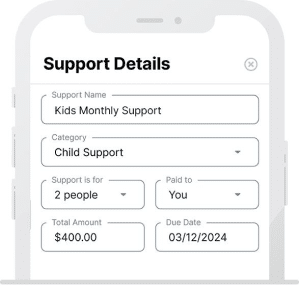
With SupportPay, you can keep records connected to the obligation, upload proof such as pay stubs or orders, document payment history, record the obligation start date, and maintain a clearer financial record over time.
For eligible users who opt in, SupportPay Credit Boost can help report qualifying positive payment activity. This may help make verified payments more visible as part of a credit-building record. Results vary, and SupportPay does not guarantee a specific score increase, approval, savings amount, or garnishment outcome.
The point is not to create more debt. The point is to help responsible payments you are already making become easier to prove and, when eligible, easier to recognize.
You Are Already Paying. Now Prove It.
Wage garnishment can feel like money is leaving your paycheck and disappearing into a system you cannot control. But documentation gives you something important: a record.
A record can help you prove what was withheld. It can help you ask better questions. It can help you compare payroll deductions to agency records. It can help you identify missing credits. It can help you prepare for reviews, disputes, modifications, or releases. And, when eligible, it may help your payment history become part of a positive credit-building story.
You cannot always control the garnishment process. But you can control how well you document it.
Start with your next pay stub. Save it. Track it. Upload it. Compare it. Make the payment history easier to prove and harder to overlook.
Start Now
If wages are already being withheld from your paycheck, do not wait until a payment goes missing to get organized. SupportPay helps you track wage garnishment payments, upload proof, organize records, document obligation start dates, and explore whether eligible verified payments can support your credit recovery. The money is already leaving your paycheck. Make sure the record does not disappear.
FAQ: How to Track Wage Garnishment Payments
How do I track wage garnishment payments?
Start by saving every pay stub that shows the garnishment deduction. Record the pay date, amount withheld, recipient or agency, posted date, amount credited, balance, and proof saved. Compare your payroll records to agency or creditor records regularly.
Is my pay stub proof of wage garnishment?
Your pay stub is important proof that money was withheld from your paycheck. You may also need agency payment histories, court records, creditor statements, or other documentation to show where the money was credited.
What if my employer deducted the money but the agency did not credit it?
Gather your pay stub, case number, pay date, employer name, and amount withheld. Contact the agency, creditor, court, or recipient listed on the order and ask how to submit proof for review.
How long should I keep garnishment records?
Keep records for as long as the garnishment is active and for a reasonable period afterward. If the obligation involves child support, taxes, court judgments, or long-term balances, it may be wise to keep records for years.
Can payroll stop a garnishment if I prove I paid?
Usually payroll needs official instructions from the court, agency, creditor, or issuing authority before stopping or changing withholding. Proof of payment may help you request a review, but payroll generally cannot act without proper authorization.
Can SupportPay replace official agency records?
No. Official balances and orders are controlled by courts, agencies, creditors, or issuing authorities. SupportPay helps you organize your own records and proof so they are easier to access and use.
Can tracking garnishment payments help my credit?
Tracking alone does not automatically improve credit. However, organized records may help support eligible positive payment reporting through SupportPay Credit Boost. Results vary, and no specific score increase is guaranteed.
What documents should I upload to SupportPay?
Useful documents may include garnishment orders, income withholding notices, pay stubs, agency payment histories, balance statements, proof of obligation start date, modification notices, release notices, and written communications.