


Wage garnishment can sometimes be reduced, modified, released, or ended, but the path depends on the type of order and the proof you have. Learn what records to collect and how to build a stronger documentation trail.
The Question Everyone Asks
When money starts disappearing from your paycheck, one question usually comes first: Can I get out of wage garnishment?
The honest answer is: sometimes. But not always in the way people hope, and not usually by simply asking payroll to stop.
Wage garnishment is usually tied to a court order, agency instruction, tax levy, child support order, student loan process, creditor judgment, or other legal authority. Once your employer receives the order, payroll generally must follow it until the employer receives official instructions to modify, release, or stop the withholding.
That can feel frustrating, especially if you believe the amount is wrong, the balance is outdated, the debt has been paid, or the garnishment is creating serious hardship. But there is one thing that can make a major difference in almost every situation: documentation.
If you want to challenge, reduce, modify, review, or eventually end a garnishment, you will usually need proof. Proof of what was withheld. Proof of where it was sent. Proof of the balance. Proof of payments. Proof of the original obligation. Proof of errors. Proof that the order should change.
This article explains when wage garnishment may end, why employers usually cannot stop it on request, what proof you may need, how different garnishment types work, and how SupportPay can help you organize the records that may support your next steps.
Important disclaimer
This article is for informational purposes only and is not legal advice. Wage garnishment rules vary by state, debt type, court order, agency, creditor, and individual situation. If you need advice about your rights, deadlines, exemptions, legal options, or court process, contact the court or agency listed on your notice, your payroll department for administrative questions, or a qualified attorney.
Can wage garnishment ever stop?
Yes, wage garnishment can stop in some situations. A garnishment may end when the debt or obligation is paid in full, when a court or agency issues a release, when the order is modified, when the employee successfully challenges the garnishment, when a repayment arrangement changes, when a bankruptcy process affects eligible debts, or when the underlying legal obligation ends.
But the process depends heavily on the type of garnishment. Child support is different from a credit card judgment. Taxes are different from student loans. Medical debt judgments are different from family support orders. Each has its own rules, procedures, notices, and decision-makers.
The key is to identify exactly what kind of garnishment you have and who has authority to change it.
Why your employer usually cannot just stop withholding
Many employees understandably start with payroll. After all, payroll is the department taking money out of the paycheck. But payroll is usually not the party that created the garnishment. Payroll is following instructions from a court, agency, creditor, tax authority, or other issuing entity.
That means your employer usually cannot stop a garnishment simply because you ask, even if you are under financial stress or believe the balance is wrong. Payroll generally needs an official release, termination notice, modification, amended order, or other written instruction.
This matters because arguing with payroll may not solve the problem. Payroll may be able to explain what is being withheld and provide records, but the authority to change the order usually sits elsewhere.
If you think the garnishment should stop or change, ask: Who issued the order? What process do they require? What proof do they need? How will the release or modification be sent to my employer?
Common ways wage garnishment ends
Although the process varies, these are common ways garnishments may end or change.
1. The debt or obligation is paid in full
Some garnishments end when the full balance, including any allowed interest, fees, costs, or arrears, is paid. But do not assume withholding will stop immediately. The issuing entity may need to confirm the balance and send a release to payroll.
2. A court or agency issues a release
A release is an official instruction telling the employer to stop withholding. Payroll usually needs this document before it can stop deductions.
3. The order is modified
Some orders can be changed. For example, a support order may be modified under certain circumstances, or a repayment amount may be adjusted. Modification usually requires a formal process.
4. The employee successfully challenges the garnishment
If there is a legal error, wrong identity, incorrect amount, improper notice, exempt income, or another valid issue, a person may be able to challenge the garnishment. Deadlines can be short, so act quickly and seek legal guidance when needed.
5. A repayment arrangement changes
In some cases, a creditor, agency, or authority may agree to a different payment arrangement. Get any agreement in writing and confirm whether it changes the wage garnishment.
6. Bankruptcy affects eligible debts
Bankruptcy may stop or affect certain garnishments, but not all debts are treated the same. Child support, some taxes, and other obligations may continue or receive special treatment. Speak with a qualified bankruptcy attorney if this may apply.
7. The underlying obligation ends
Some obligations end based on legal terms, age of a child, satisfaction of judgment, repayment completion, court order, or agency determination. Even then, payroll may need official notice before withholding stops.
How to identify what type of garnishment you have
Before you can understand your options, identify the garnishment type. Start with the notice or order. It should name the issuing entity, case number, creditor, agency, support office, tax authority, or court.
| Garnishment type | Who may issue or manage it? | Common records to find |
|---|---|---|
| Child support or alimony | Court, child support agency, state disbursement unit | Support order, income withholding order, payment history |
| Tax levy | IRS, state tax agency, local tax authority | Tax notice, levy paperwork, balance statement |
| Student loan garnishment | Federal agency, loan holder, servicer | Administrative wage garnishment notice, loan records |
| Consumer debt judgment | Court, creditor, collection attorney | Judgment, garnishment order, creditor statement |
| Medical debt judgment | Court, creditor, collection attorney | Judgment, garnishment paperwork, balance statement |
Once you know the type, you can ask the right office about review, release, modification, or dispute procedures.
Why child support garnishment is different
Child support wage garnishment is often handled through income withholding. In many cases, payments are automatically deducted from wages because the support system is designed to ensure regular payment. This can be helpful for consistency, but it can also continue for years and may involve several layers of records.
Child support garnishment may include current support, arrears, medical support, fees, or other related obligations. A parent may believe they are current, while the agency record shows a different balance. A support amount may change, but payroll may not update until it receives the new order. A case may involve more than one child, more than one order, or more than one state.
In some situations, proof of consistent payment history may be relevant when asking questions about payment handling, balance corrections, reviews, or modifications. But child support rules are specific, and you should always confirm the correct process with the court or agency listed on the order.
The key issue: proof of payment
If you want to get out of wage garnishment, reduce it, correct it, or request review, proof is often the foundation. Saying “I paid” may not be enough. You may need documents that show exactly what was withheld and when.
Important proof may include:
- Pay stubs showing each garnishment deduction
- Year-to-date payroll summaries
- Agency or creditor payment histories
- Balance statements
- Bank records, if payments were made outside payroll
- Original court order, support order, levy, or judgment
- Modification orders
- Release, satisfaction, or termination notices
- Emails, letters, and written communication notes
The stronger your record, the easier it is to explain what happened.
Step-by-step action plan
If you want to explore whether a wage garnishment can be changed or ended, start here.
- Identify the type of garnishment. Find the order and determine whether it relates to child support, taxes, student loans, a judgment, or another obligation.
- Find the issuing entity. Write down the court, agency, creditor, tax authority, or office listed on the notice.
- Collect proof of all payments withheld. Save pay stubs, payroll summaries, and payment histories.
- Compare your records to the official balance. Look for missing credits, posting delays, duplicate deductions, or incorrect amounts.
- Document errors clearly. Create a list with dates, amounts, and the specific issue.
- Contact the correct office. Ask what process is required for review, modification, correction, release, or alternative payment handling.
- Ask what documents they need. Do not guess. Ask for the required forms, proof, deadlines, and submission method.
- Keep making required payments unless officially instructed otherwise. Stopping payments without authorization can create more problems.
- Save every response. Keep written records of calls, emails, letters, and instructions.
What not to do
Avoid these mistakes if you are trying to resolve wage garnishment:
- Do not ignore the order.
- Do not assume payroll can stop it without official instruction.
- Do not rely only on verbal conversations.
- Do not stop required payments without legal or agency approval.
- Do not wait to collect records until there is a problem.
- Do not throw away old pay stubs.
- Do not assume the balance is correct without checking.
Can a garnishment be reduced?
In some situations, a garnishment may be reduced or modified, but this depends on the type of obligation and the rules that apply. Some people may qualify for exemptions, hardship review, payment plan changes, support modifications, or other relief. The process and availability vary widely.
If the garnishment is causing hardship, contact the issuing court, agency, creditor, or tax authority and ask what options exist. If you are unsure of your rights or deadlines, consult a qualified attorney.
Documentation matters here too. If you request a review, you may need proof of income, expenses, dependents, payment history, balances, and hardship.
Can bankruptcy stop wage garnishment?
Bankruptcy may stop certain wage garnishments through an automatic stay, but not every obligation is treated the same. Consumer debt judgments may be affected differently than child support, alimony, certain taxes, student loans, restitution, or other obligations.
Because bankruptcy has serious legal and financial consequences, speak with a qualified bankruptcy attorney before making decisions. Do not assume bankruptcy will stop every garnishment.
How SupportPay supports the path forward
SupportPay does not stop garnishments, change court orders, negotiate debts, provide legal advice, or guarantee a release. But it can help with one of the most important parts of the process: documentation.
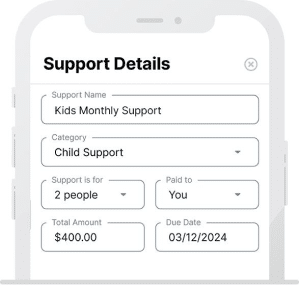
SupportPay helps users organize obligations, upload pay stubs and orders, track payment history, document the obligation start date, and preserve records in one place. For people dealing with family-related obligations, support payments, shared expenses, or child support wage garnishment, that organized record can be especially valuable.
If you need to contact a court, agency, payroll department, creditor, or attorney, clear documentation can help you explain the situation more effectively. It can also reduce the stress of searching through scattered pay stubs, emails, portal screenshots, and paper notices.
Why credit building still matters during garnishment
Even if your garnishment is still active, the payments being made may have value. If money is being withheld every pay period, that payment history may show consistency. But unless eligible payments are documented and reported as positive payment activity, they may remain invisible to traditional credit systems.
SupportPay Credit Boost is designed to help eligible verified payments become more visible as positive payment activity for users who opt in. It does not require a hard inquiry or new credit card, and it is not a loan. Results vary, and SupportPay does not guarantee a specific score increase, approval, or savings amount.
The idea is simple: while you are working through the garnishment process, do not let the payments already being made disappear without a record.
The Real Exit Plan Starts With Documentation
When people ask whether they can get out of wage garnishment, they are usually hoping for a quick answer. But the real answer depends on the order, the law, the balance, the issuing authority, and the proof available.
Documentation is not the whole solution, but it is often the starting point. Without proof, it is harder to dispute a balance, show payments, request review, correct errors, or confirm that a garnishment should end. With proof, you can have a more informed conversation with the people who control the order.
If wages are being garnished, start building your record now. Save the order. Save every pay stub. Track each deduction. Compare agency records. Keep written notes. Upload proof. Organize the story.
You may not be able to stop wage garnishment overnight. But you can stop letting the record stay scattered, incomplete, or invisible.
Start Now
If you want to eventually get out of wage garnishment, start by building the proof. SupportPay helps you organize wage garnishment records, upload pay stubs and orders, track payment history, document obligation start dates, and explore whether eligible verified payments can support your credit recovery. The better your records are, the stronger your next step can be.
FAQ: Can You Get Out of Wage Garnishment?
Can you get out of wage garnishment?
Sometimes. Wage garnishment may end if the debt is paid, the order is released, the garnishment is successfully challenged, the order is modified, or another legal process applies. The exact answer depends on the type of garnishment and your situation.
Can my employer stop wage garnishment if I ask?
Usually no. Employers generally need an official release, modification, termination notice, or other instruction from the court, agency, creditor, or issuing authority before they can stop withholding.
What proof do I need to stop wage garnishment?
You may need pay stubs, payment histories, balance statements, the original order, case numbers, release notices, modification orders, and written communications. Requirements vary by garnishment type.
Can proof of payment help with wage garnishment?
Yes. Proof of payment can be important when disputing balances, correcting missing credits, requesting review, or showing that payments were made consistently.
Can child support wage garnishment be stopped?
Child support garnishment rules are specific and often involve courts or agencies. In some situations, withholding may change or end, but you must follow the proper process and obtain official instructions.
Can bankruptcy stop wage garnishment?
Bankruptcy may affect some garnishments, but not all obligations are treated the same. Child support, alimony, certain taxes, and other debts may have special rules. Consult a qualified bankruptcy attorney.
What should I do first if I think my garnishment is wrong?
Find the original order, save your pay stubs, compare deductions to official records, identify the issue, and contact the court, agency, creditor, or issuing authority listed on the notice.
Can SupportPay guarantee my garnishment will be removed?
No. SupportPay cannot guarantee legal outcomes, stop garnishments, change orders, or force agencies to update balances. SupportPay helps users organize documentation, track payment history, and explore eligible positive credit reporting.