


When HR leaders talk about wellness programs, the conversation often starts with employee experience. When finance leaders evaluate the same programs, the conversation usually starts somewhere else: budget, risk, measurable return, and whether the organization can justify another line item. That difference in perspective is exactly why insurance carrier wellness funds that employers are reimbursed for deserve more attention from CFOs, finance teams, and benefits leaders working together.
The strongest case for wellness dollars is not that they make a program feel free. They are not magic money, and employers still need to understand eligibility, reimbursement timing, invoice requirements, and program outcomes. The real value is that these funds may allow an employer to launch or expand a meaningful financial wellbeing initiative using dollars that already exist inside the benefits ecosystem. For companies under pressure to do more for employees without increasing spend, that matters.
Financial wellbeing programs are especially important because financial stress is not isolated from business performance. Employees who are worried about debt, divorce, caregiving costs, shared expenses, medical bills, or basic emergency savings often experience that stress during the workday. It can show up as absenteeism, presenteeism, healthcare utilization, manager escalations, turnover risk, and lower engagement. A CFO does not need to view financial wellbeing as a soft benefit. It can be evaluated as a workforce risk management strategy.
Why finance should care about wellness reimbursement
Many employers already pay into insurance arrangements that include wellness-related value. The problem is that those dollars may not be obvious in the budget. They may sit inside carrier contracts, renewal materials, wellness reimbursement pools, health improvement credits, or discretionary innovation funds. If HR, finance, and the broker do not ask directly, the organization may never claim them.
From a finance perspective, unclaimed wellness dollars represent an inefficient use of the benefits relationship. The employer may be paying premiums, absorbing renewal increases, and discussing claims trend every year while failing to use funding intended to improve employee wellbeing. That is why the question should not simply be, “Can we afford another program?” The better question is, “Are we already entitled to insurance carrier wellness funds that employers are reimbursed for, and if so, how can we deploy them toward a measurable workforce problem?”
This also changes the internal approval conversation. A new program funded entirely from operating budget may face resistance. A program supported by carrier reimbursement can be evaluated differently. Finance can compare the gross program cost, expected reimbursement, net cost, timing of cash flow, and potential impact on workforce costs. That is a more complete and more useful view.
Financial stress creates measurable costs
Financial stress can create costs in several categories finance teams already track. Absenteeism is one. Employees dealing with family financial conflict, debt crises, legal obligations, or caregiving responsibilities may miss work to manage urgent issues. Presenteeism is another. An employee can be physically present but mentally consumed by financial instability, payment disputes, or household obligations.
Healthcare utilization is also relevant. Financial stress is connected to anxiety, depression, sleep disruption, headaches, gastrointestinal issues, hypertension, and delayed preventive care. Employees under financial pressure may postpone treatment until a condition becomes more expensive. They may skip medication because of cost. They may use emergency services because they did not access earlier care. These patterns affect claims and renewal discussions.
Turnover creates another cost category. Employees under financial pressure may leave for a modest pay increase, even if they would otherwise prefer to stay. Replacement costs, training time, lost institutional knowledge, and manager burden all create real expense. A financial wellbeing program funded through carrier reimbursement can therefore be positioned as a tool to reduce avoidable workforce disruption.
How to evaluate the ROI case
A practical CFO-facing business case does not need to promise unrealistic savings. It should be disciplined, conservative, and measurable. Start by identifying the likely employee population affected by financial stress. This may include employees navigating divorce or separation, employees with caregiving responsibilities, employees with high debt, employees without emergency savings, employees managing expenses across households, and employees confused by healthcare bills or benefits costs.
Next, identify the business outcomes most likely to be affected: absenteeism, productivity, healthcare utilization, retention, engagement, and manager time. Then estimate the potential cost of those issues using internal data where possible. Even directional data can help. For example, if a company knows the average cost of turnover for a role, the average number of sick days, or the cost of replacing experienced employees, it can build a reasonable model.
Finally, compare the program cost against available reimbursement. If the carrier confirms that the program qualifies for insurance carrier wellness funds that employers are reimbursed for, the net cost may be significantly lower than expected. In some cases, a pilot may be reimbursed entirely. In other cases, reimbursement may offset part of the expense while giving the employer data to negotiate expanded support at renewal.
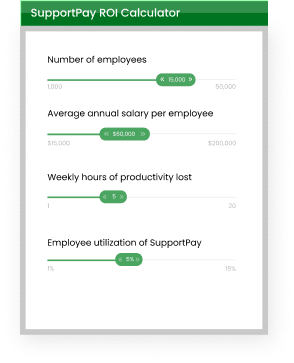
A simple ROI framework finance can use
- Gross program cost: the full cost before reimbursement.
- Confirmed carrier reimbursement: the amount the carrier has approved in writing.
- Net employer cost: gross cost minus expected reimbursement.
- Target population: the number of employees expected to use or benefit from the program.
- Outcome indicators: participation, engagement, employee-reported stress reduction, absenteeism patterns, retention indicators, and qualitative manager feedback.
- Renewal value: the ability to use program data to negotiate more funding or broader eligibility in the next plan year.
This framework keeps the conversation grounded. It does not require the employer to prove every dollar of savings immediately. It does require the employer to define what success looks like and how reimbursement will be tracked.
What finance should ask HR and the broker
- What wellness reimbursement provisions exist in our current medical, disability, EAP, and supplemental carrier contracts?
- Have we ever submitted invoices for wellness program reimbursement, and what was approved?
- Is there a per-employee-per-month wellness allocation, annual pool, incentive credit, or discretionary fund available?
- Would a financial wellbeing program focused on stress reduction qualify?
- What documentation is required before launch and after invoice submission?
- How long does reimbursement typically take, and how should finance account for it?
- Can participation and outcomes data be used to negotiate more funding at renewal?
These questions help move the conversation from a vague wellness idea to a structured funding and ROI discussion.
Why financial wellbeing is a stronger category than generic perks
Not every employee benefit has a clear connection to health outcomes. Financial wellbeing does. When a program helps employees reduce debt pressure, build emergency savings, manage shared family expenses, navigate divorce, coordinate caregiving costs, understand medical bills, or stabilize household obligations, it is addressing root causes of stress. That makes the program easier to connect to whole-person health, behavioral health risk, and productivity.
For finance leaders, this distinction is important. A generic perk may be popular but difficult to defend during budget review. A financial wellbeing program funded through insurance carrier wellness funds that employers are reimbursed for can be defended as a targeted intervention against measurable stress-related costs.
The takeaway
Wellness dollars should not be viewed only as an HR benefit. They are a finance-relevant funding mechanism that can help employers address workforce risk without automatically increasing net spend. The organizations that benefit most will be the ones that bring HR, finance, and brokers into the same conversation, identify available funds, confirm eligibility, and measure outcomes carefully. The money may already be there. The business case is to use it well.