


Long-Distance Caregiving: How Siblings in Different States Can Share Financial Responsibilities
One of the most common caregiving situations families face today is distance. A daughter lives ten minutes from her elderly mother. Her brother is in another state entirely. Their sister is across the country. When a parent needs more care, the sibling who is closest often ends up doing the most — and without a clear financial plan, the siblings who are further away can feel helpless, guilty, and disconnected from what is happening.
Long-distance caregiving is not an excuse for unequal contribution. It simply means that contribution looks different depending on where each sibling lives. This guide is for families trying to figure out how to share financial responsibilities fairly when they are spread across different states, different households, and different bank accounts.
The Core Challenge of Long-Distance Caregiving
When a son lives five minutes from his parent and his sister lives five hundred miles away, the natural tendency is for the nearby sibling to handle everything — appointments, grocery runs, medication management, emergency responses. This is practical and often unavoidable. But it creates a real imbalance that, if left unaddressed, becomes a significant source of resentment over time.
The nearby sibling contributes time, energy, and often money. The distant sibling may contribute financially but feels guilty about not being physically present. Without a clear and agreed-upon system, both siblings can end up feeling like they are doing more than they are getting credit for — and neither feels good about the situation.
Step 1: Acknowledge the Imbalance Honestly
The first step is simply acknowledging that long-distance caregiving creates an inherent imbalance — and that this imbalance needs to be addressed openly rather than ignored. A daughter who drives her father to appointments three times a week is contributing something real and measurable. A brother who sends money each month from another state is also contributing something real.
The goal is not to make these contributions equal — that is often impossible. The goal is to make them fair. And fairness requires an honest conversation about what each sibling can realistically offer, both financially and in terms of time.
Step 2: Define What Each Sibling Can Contribute
The Nearby Sibling
The sibling who lives closest will typically contribute more in hands-on care. This might include managing medical appointments, handling day-to-day household needs, coordinating with care providers, and being the primary emergency contact. This is a significant contribution of time and energy that should be explicitly recognized in the family’s financial arrangement.
The Distant Sibling
Siblings who live further away can contribute in several meaningful ways. Financial contributions are the most straightforward — covering a larger share of caregiving costs to compensate for the time they cannot contribute in person. But distant siblings can also take on administrative tasks that can be handled remotely: managing finances, paying bills online, coordinating with insurance providers, researching care options, and managing shared financial records across households and bank accounts.
Step 3: Set Up a Shared Financial System That Works Across States
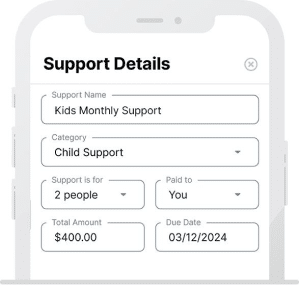
Managing caregiving finances across different states and different households requires a system that gives every sibling full visibility regardless of where they live. When a sister in one state is covering medical costs and a brother in another state is contributing to a shared fund, both need to be able to see the complete financial picture in real time.
A shared financial system for long-distance caregiving should include:
- A dedicated caregiving fund or shared account that all siblings contribute to and expenses are paid from
- A shared record of all expenses updated regularly — accessible to every sibling from any location
- Clear records of who has paid what across all households and bank accounts involved
- A regular monthly summary shared with all siblings so nobody is left in the dark
The key is transparency. When every sibling — near or far — can see exactly what is being spent and who is contributing, suspicion and resentment have nowhere to take root.
Step 4: Schedule Regular Financial Check-Ins
Long-distance families often let financial conversations slide because they are not physically together. But regular check-ins are essential for keeping the arrangement fair and for catching imbalances before they become serious problems.
A monthly video call or message thread specifically for reviewing caregiving finances — what was spent, what each sibling contributed, what is coming up — takes very little time and prevents a lot of conflict. Treat it as a standing commitment rather than something that happens only when there is a problem.
Step 5: Revisit the Arrangement as Things Change
Long-distance caregiving situations evolve. A parent’s needs increase. A sibling moves closer or further away. Someone’s financial situation changes. The arrangement that worked at the beginning may need to be adjusted significantly over time.
Build in a formal review every three to six months where all siblings assess whether the current arrangement is still fair and whether any adjustments are needed. This is particularly important when a parent’s care needs shift significantly — moving from minimal support to intensive care, or from home-based care to a facility.
When One Sibling Feels They Are Doing Everything
Even with the best systems in place, long-distance caregiving can create a situation where the nearby sibling feels overwhelmed and underappreciated. If this is happening in your family, the answer is not silence. Bring it to the table honestly. Share what the hands-on caregiving actually involves. Give distant siblings the opportunity to step up — whether financially, administratively, or by arranging visits that give the nearby sibling a break.
The families that navigate long-distance caregiving most successfully are not the ones where everything is perfectly equal. They are the ones where every sibling feels seen, every contribution is recognized, and the financial picture is completely transparent to everyone involved.
Final Thoughts
Distance does not have to mean disengagement. With honest communication, a clear division of responsibilities, and a shared system for tracking finances across households and bank accounts, siblings in different states can share caregiving responsibilities in a way that feels fair to everyone — including the parent who needs their care.