


Some of the most stressful financial moments employees face are not about budgeting in the abstract. They happen when family life changes and money becomes harder to coordinate: a divorce, a separation, a caregiving responsibility, a medical expense, a child-related cost, or a household transition that suddenly requires more documentation, more communication, and more emotional energy.
For employers, these moments matter because they often follow employees into the workday. An employee who is trying to organize receipts, clarify who paid for what, request reimbursement from a family member, manage caregiving costs, or document child-related expenses may be present at work but mentally pulled into financial conflict. That stress can affect focus, sleep, productivity, attendance, and overall wellbeing.
This is where insurance carrier wellness funds that employers are reimbursed for can become a strategic opportunity. When wellness dollars are used for practical support tied to stress reduction and whole-person health, employers may be able to help employees navigate real-life financial pressure without treating the program as a traditional new budget request.
Why family financial transitions belong in wellness
Family financial transitions are often overlooked in employee benefits strategy because they do not fit neatly into old categories. They are not simply retirement planning, financial literacy, or debt education. They are moments where employees need structure, clarity, and support to manage obligations that affect their family, their health, and their ability to stay focused at work.
Examples include a parent coordinating shared expenses after separation, an employee paying for a child’s medical or school costs, a caregiver managing bills for an aging parent, or a household adjusting after a major life change. These situations can create recurring stress because the employee is not just making one financial decision. They are managing an ongoing process.
A wellness program that helps employees organize these obligations can be easier to connect to carrier priorities than a generic education library. The employer can explain the problem clearly: employees are facing family-related financial stress, that stress affects wellbeing, and practical tools can reduce friction before it becomes a larger health or productivity issue.
What practical support can look like
The strongest programs help employees do something useful in the moment. They go beyond information and give employees a way to reduce confusion, document activity, coordinate with others, and feel more in control.
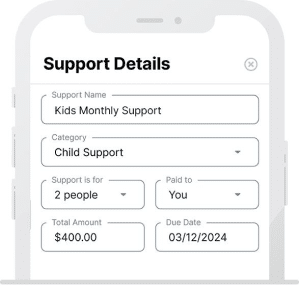
- Shared expense organization: helping employees track family-related costs, receipts, reimbursements, and payments across households.
- Caregiving expense support: helping employees organize bills, contributions, recurring costs, and family responsibilities tied to aging parents or loved ones.
- Child-related cost coordination: helping parents manage medical co-pays, childcare, activities, school expenses, clothing, transportation, and other recurring obligations.
- Documentation and recordkeeping: giving employees a clearer way to maintain payment history, reimbursement requests, and expense records when life is complicated.
- Conflict reduction: reducing the repeated back-and-forth that can happen when employees have to coordinate money with a former partner, co-parent, sibling, or other family member.
This kind of support quietly points to a more modern category of financial wellbeing. It is not just advice. It is infrastructure for the messy money moments that create daily stress for working families.
How employers can position the reimbursement case
When asking about wellness reimbursement, employers should avoid presenting family financial support as a convenience perk. The stronger case is to frame it around stress reduction, behavioral health risk, employee stability, and whole-person wellbeing.
HR can explain that employees dealing with family financial transitions may experience anxiety, distraction, absenteeism, sleep disruption, and avoidable conflict. A program that helps them organize obligations, document payments, coordinate expenses, and reduce financial friction can support better wellbeing outcomes.
The broker or carrier should be asked to review whether this type of support can qualify under wellness funds, health improvement dollars, reimbursement pools, innovation funds, or value-added wellbeing categories. The employer should request written confirmation of the eligible amount, covered expenses, documentation requirements, invoice process, and reimbursement timeline before launch.
Questions to ask before choosing a program
- Which family financial transitions are creating the most stress for our employees?
- Do our current carrier contracts include insurance carrier wellness funds that employers are reimbursed for?
- Would support for shared expenses, caregiving costs, child-related expenses, or family financial transitions qualify as stress reduction?
- Can the program provide documentation that finance and the carrier will need for reimbursement?
- Can employees use the support privately and easily during real-life moments of stress?
- Can we start with a focused pilot for employees navigating divorce, caregiving, or shared family obligations?
Why this approach is different
Many financial wellbeing programs focus on teaching employees what they should know. That can be helpful, but it does not always solve the problem employees are dealing with today. A working parent coordinating expenses across households does not only need an article about budgeting. A caregiver managing bills with siblings does not only need a webinar. They need a practical tool that brings structure, documentation, and reduced conflict to the money moments that affect their daily lives.
The takeaway
Family financial transitions can create daily stress that affects focus, productivity, attendance, and wellbeing. Employers that use insurance carrier wellness funds that employers are reimbursed for to support practical family financial tools may be able to help employees regain stability without adding unnecessary budget pressure. The opportunity is to recognize these transitions as real wellness moments and fund support that meets employees where they are.